Trump Is Strengthening the Logic of Authoritarianism and Nationalism in Turkey
By Halil Karaveli
Read the full article in Foreign Policy here.
In an illiberal world, the Turkish opposition can no longer convince voters that democracy alone is a source of strength.
Much has been written about how U.S. President Donald Trump is pursuing an authoritarian agenda at home while embracing dictators abroad. But even this criticism does not fully capture the way he has reconfigured the global order to strengthen the logic of authoritarianism itself.
The results can be seen with regrettable clarity in Turkey, where President Recep Tayyip Erdogan is a leading beneficiary of Trump’s force-based international disorder. Erdogan has simultaneously denounced the United States and cozied up to Trump, all while personifying the national strength that Turkey relies on in an anarchic and illiberal world. Turkey’s opposition, meanwhile, is animated by an idealistic faith in the discarded liberal order and vows to abandon Erdogan’s nationalist foreign policy. Unless it reconsiders and doubles down on nationalism, Turkish voters will return to Erdogan.
Erdogan presents himself as the incarnation of Turkish aspirations for regional and global power. He has long advocated for a multipolar global order not dominated by great powers, saying, “The world is bigger than five”—a reference to the permanent members of the United Nations Security Council. In pursuit of this vision, Ankara has cultivated strong relations with Venezuelan President Nicólas Maduro. When Maduro was captured by U.S. forces in January, Erdogan’s chief advisor, Mehmet Ucum, stated, “There is no option other than power-based struggle against imperialist aggression.”
At the same time, Erdogan has also acted as an acquiescent Trump ally who is keen to cooperate with the United States when it serves his purposes. Thus, as his advisor condemned imperialist aggression, Erdogan himself abstained from expressing any criticism of the Maduro raid. After a conversation with Trump on Jan. 27, Erdogan said, “We will continue to develop the cooperation between the United States and Turkey,” adding, “It’s in our common interest that the relations progress in all areas.” Turkey accepted the invitation to join Trump’s Board of Peace, while most NATO allies declined.
The relationship that Erdogan enjoys with Trump provides Turkey with opportunities to promote its national interests in tandem with the United States. According to a recent survey by the European Council on Foreign Relations, only 11 percent of Turks see the United States as an ally with whom they share values, but 42 percent see it as a necessary partner, with whom Turkey must strategically cooperate.
This opportunistic approach helps Erdogan make Turkey into a significant geopolitical actor, capable of projecting military and economic power from the Middle East and the Balkans to Africa and Central Asia. Disparaged by critics as an expression of imperial delusion, the extension of Turkish influence is a source of national pride and an unquestionable asset for Erdogan in today’s uncertain world.
What’s more, changing international conditions have increasingly fused the case for projecting power internationally with Erdogan’s case for projecting power in domestic politics.
Continue reading the full article in Foreign Policy here.
AUTHOR'S BIO: Halil Karaveli is a senior fellow with the Central Asia-Caucasus Institute & Silk Road Studies Program Joint Center. He is the author of Why Turkey is Authoritarian: From Ataturk to Erdogan.
Sedat Peker and the Return of Turkey’s Violent Far Right
By Ryan Gingeras
June 17, 2021
As the Turkish public grapples with the repercussions of a crippled economy and a grinding pandemic, Turkey’s twitter-sphere, as well as much of its press, remains transfixed on the revelations of Sedat Peker. The videos reinforce certain realities regarding the Turkish state’s relationship with organized crime and with the violent far right. The impact of this reputed gangster on Turkish politics speaks to the influence of the country’s far right, which fits neatly within the country’s broader historical development since the 1970s. Peker’s videos are a reminder of the obstacle to democratization that the far right networks in the state represent.
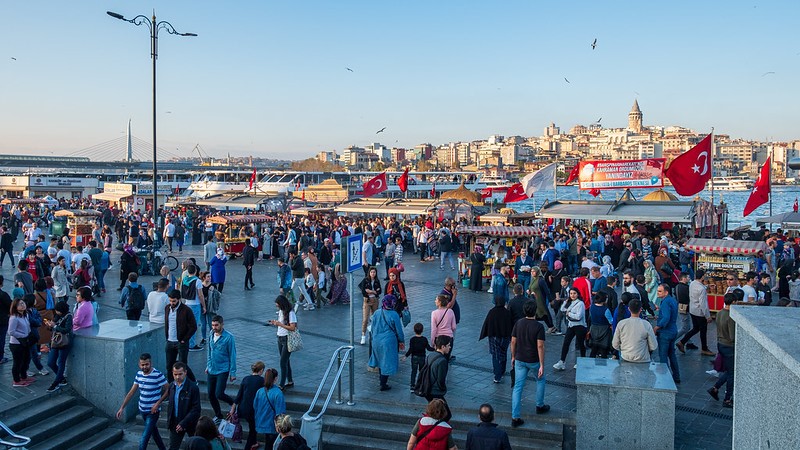
Taking it to the streets: Turkey's rising social tensions
By Gareth H. Jenkins
September 18th, 2015, The Turkey Analyst
The recent spate of violent protests by Turkish ultranationalists – including attempted lynchings of ethnic Kurds -- and the attacks by government supporters on the Hürriyet newspaper have reinforced already serious concerns about both the deepening fissures in Turkish society and the continuing weakening of the rule of law in the country.
Kılıcçaroğlu Jettisons the Jargon of Secularism but Surrenders to Nationalism
By Halil M. Karaveli (vol. 3, no. 11 of the Turkey Analyst)
Kemal Kılıcçaroğlu, the new leader of Turkey’s main opposition party CHP, is reaching out to religious conservatism. Yet while he is jettisoning the jargon of secularism, he does not deviate from his party’s traditional nationalism. Thus he is able to offer little new hope of transcending Turkey’s existential Turkish-Kurdish divide.
The Turkish Nationalist Opposition and its Foreign Policy Views
By Halil M. Karaveli and M.K. Kaya (vol. 3, no. 6 of the Turkey Analyst)
Opinion polls in Turkey show that there is a very real possibility that the next general election may return one or two of the nationalist opposition parties, CHP and MHP to power. The nationalist opposition, together with strong resistance within the ruling AKP itself and the government’s mishandling of those initiatives, has in fact already helped force the AKP to abandon its openings to Armenia and to the Kurdish minority. A Turkey ruled by the secularist-nationalists would be more circumspect in its dealings with Muslim countries. Yet in a fundamental sense, the secularist-nationalists are, just like the current government, inclined to defy the West, strategically as well as ideologically.
Visit also