The Long Road that Led to the AKP’s “New Turkey”

By Fatih Yaslı (vol. 28, no. 1 of the Turkey Analyst)
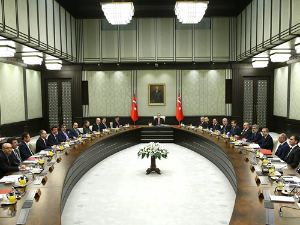
The regime that the AKP is constructing certainly deserves to be defined as “new.” However, a proper understanding of the rise of the Islamists requires that their ascent is put in the right historical context, and that the true nature of the old Turkish regime is appreciated. Turkey’s Islamization has a long prehistory. It has been a long time since the radicalism of Kemalism was discarded. Instead, religion and conservatism have been consistently promoted in the name of anti-socialism.
What the Columnists Say

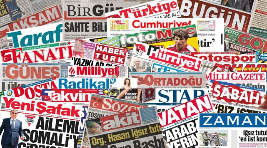
Several columnists have brought up the recent attack against Charlie Hebdo in Paris. Yusuf Kaplan in Yeni Safak writes that the attack was the work of the French “deep state” in order to increase Islamophobia. Orhan Kemal Cengiz in Bugün writes that pious Muslims must stop hiding behind conspiracy theories, and Nuray Mert writes on the Diken news site that blaming such attacks on groups created by the West is simply an attempt to pretend that there is not a major problem that Muslims need to tackle.
Narrative Veils: Erdogan, the AKP and the Gulenist Arrests

By Gareth Jenkins (vol. 7, no. 23 of the Turkey Analyst)
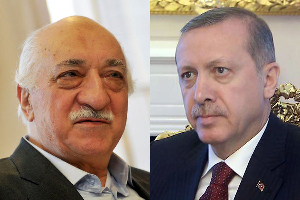
On December 14, 2014, the Turkish police staged early morning raids in 13 provinces across the country following the issuing of arrest warrants for 31 alleged members of the Gülen Movement on terrorism charges. Those detained included six journalists, prompting claims in the national and international media that the arrests were another example of President Recep Tayyip Erdoğan’s increasing suppression of freedom of expression. In fact, the narratives of the AKP and the Gülen Movement about the arrests are both attempts to coat a power struggle with the gloss of a commitment to principle.
What the Columnists Say

President Recep Tayyip Erdoğan’s recent statement that Muslims were the ones who discovered the Americas have stimulated many commentators to draw parallels to Atatürk who claimed that Turks from Central Asia had founded all the significant civilizations in the world. Murat Belge writes that Atatürk’s “Sun-Language Theory” was no less “ridiculous” than the theory about “Muslims in America.” Fatih Yaşlı disagrees, saying that the early republic and Erdoğan’s new Turkey cannot be compared, as the latter embodies an ambition to install a religiously authoritarian system. Ahmet İnsel writes that one important reason why the AKP has been able to perpetuate its hegemony is the way many modern, secular “progressives” look at people from the lower classes, that they accuse them of selling their votes in return for social welfare benefits. Yüksel Taşkın challenges the claim of Kemalists and many leftists that the liberals were responsible for paving the way for the ascent of the AKP. He writes that Kemalists were chiefly responsible for this, while the trouble for liberals is that they find it difficult to discard the notion that history inexorably progresses toward a positive ending.
The Return of the Generals

By Halil Karaveli (vol. 7, no. 21 of the Turkey Analyst)
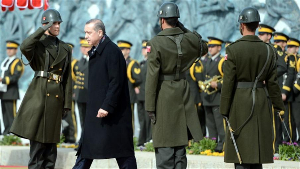
The Turkish generals are no longer afraid to speak out and they exert influence over government policies. Erdoğan invited the military back into the power equation when, faced with the Gülenist challenge to his power, and in need of a new ally, he gave the signal to open the prison doors for the convicted officers. But more than anything else, it is the persistence of an authoritarian mindset that sets the stage for the recurrent assertion of the power of the military in Turkey.
Visit also




Joint Center Publications
Op-ed Halil Karaveli "The Rise and Rise of the Turkish Right", The New York Times, April 8, 2019
Analysis Halil Karaveli "The Myth of Erdogan's Power", Foreign Policy, August 29, 2018
Analysis Svante E. Cornell, A Road to Understanding in Syria? The U.S. and Turkey, The American Interest, June 2018
Op-ed Halil Karaveli "Erdogan Wins Reelection", Foreign Affairs, June 25, 2018
Article Halil Karaveli "Will the Kurdish Question Secure Erdogan's Re-election?", Turkey Analyst, June 18, 2018
Research Article Svante E. Cornell "Erbakan, Kisakürek, and the Mainstreaming of Extremism in Turkey", Current Trends in Islamist Ideology, June 2018
Analysis Svante E. Cornell "The U.S. and Turkey: Past the Point of No Return?", The American Interest, February 1, 2018
Op-ed Svante E. Cornell "Erdogan's Turkey: the Role of a Little Known Islamic Poet", Breaking Defense, January 2, 2018
Research Article Halil Karaveli "Turkey's Authoritarian Legacy", Cairo Review of Global Affairs, January 2, 2018