After Rojava: What Are the Prospects of Turkish-Kurdish Reconciliation?
By Halil Karaveli
Now, with the perceived threat from Rojava having been removed, the Turkish government has less reason to fear a Turkish nationalist backlash after meeting the demands of the Kurds, and has a free hand to re-commit to the peace process. President Recep Tayyip Erdoğan is in fact compelled to accommodate the Kurds to secure his hold on power. Meanwhile, the Kurds’ best bet is to team up with Turkey: there’s no potential foreign patron left after the U.S. abandoned them. The Kurds may eventually find it in their hearts to forgive Erdoğan; the question however is whether the Turks will empathize with the Kurds and accept them as their equals. Ultimately, society must internalize the change that the state has deemed is in its interest. Otherwise, social cohesion, and the state’s century-long quest for a stable base will continue to elude Turkey.
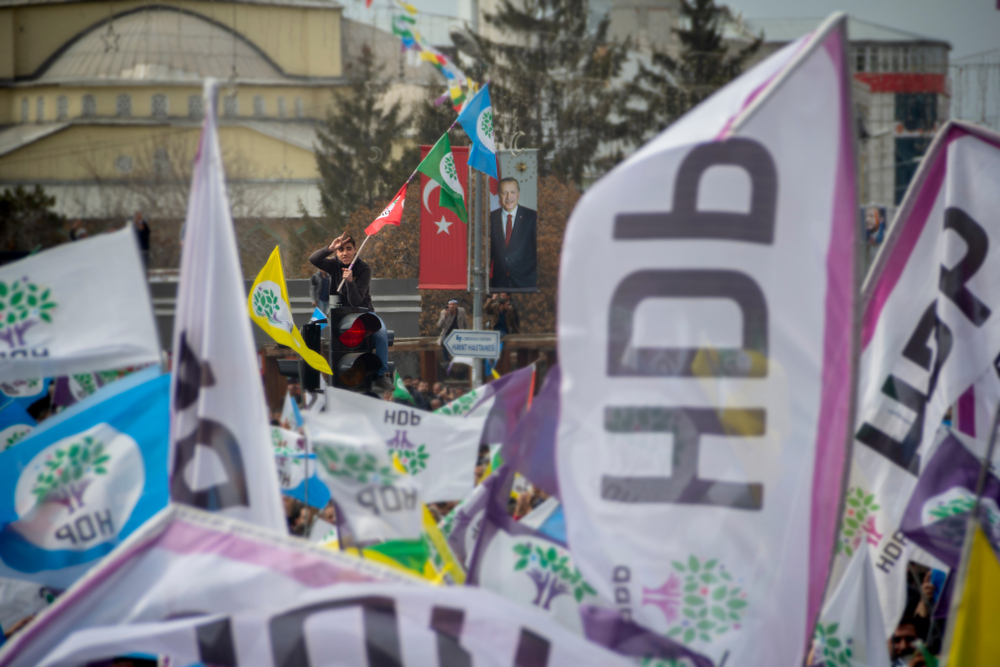
BACKGROUND:
A lightning offensive by Syrian government forces in late January undid over a decade of Kurdish self-rule in northeastern Syria, where the Syrian offshoot of the Kurdistan Workers’ Party (PKK), the Democratic Union Party (PYD) and its military wing, the People’s Protection Units (YPG), supported by Arab tribes – with whom the PYD formed the Syrian Democratic Forces (SDF) -- had established a proto-state since 2012. The Autonomous Administration of North and East Syria, also known as Rojava or western Kurdistan, comprised around a quarter of Syria – even though the Kurds make up less than ten percent of Syria’s population -- and included most of the country’s critical resources, oil and water.
Rojava represented the greatest achievement of the PKK in its more than four decades long struggle for an independent Kurdish state. The organization, which officially dissolved in May 2025, lost its military campaign in Turkey a decade ago and was hemmed in by Turkey in northern Iraq, from where it was no longer able to mount any military threat against Turkey. Absent continued U.S. endorsement, its statelet in Syria was no longer viable.
The Syrian government offensive followed after the United States, which had relied on the Kurdish forces to prevent the return of the Islamic State (IS) and to the chagrin of Turkey had armed and financed them made a volte-face. Tom Barrack, the U.S. special envoy to Syria, and ambassador to Turkey, stated that the rationale for the partnership with the SDF had largely expired because Damascus was ready to assume responsibility for security.
The fall of Rojava is a victory not only for the Syrian government, but also for Turkey that had seen the existence of a PKK-statelet, backed by the United States, along a 600 kilometer-stretch of its southern border as an existential threat. In December 2024, Turkish foreign minister Hakan Fidan described the elimination of the YPG as Ankara’s “strategic objective.” Nonetheless, Kurdish and pro-Kurdish politicians and activists in Turkey expressed consternation and deplored that Turkey had thrown its weight behind Syria’s Sunni Arab regime – Ankara has developed a close military and security relation with Damascus – instead of siding with the Kurds. They argue that Turkey should have taken the Kurds “under its wings” and hold that Turkey’s choice, and not least the fact that the Turkish nationalist public rejoiced at the Kurdish defeat, has caused an unprecedented “emotional rupture” among the Kurds in Turkey. Tuncer Bakırhan, the co-chair of the pro-Kurdish Democracy and Equality (DEM) Party, warned that the Kurds were now “lost” for Turkey.
IMPLICATIONS:
Yet what’s lost is rather the prospect – never openly acknowledged -- of eventually establishing a Greater Rojava, a Kurdish entity that would have re-united the Kurds on both sides of the Turkish-Syrian border. It’s easy to understand why the survival of the PKK statelet in northeastern Syria mattered to the Kurdish political movement in Turkey, and correspondingly why it struck fear in the Turkish government: the border between Turkey and Syria separates the same Kurdish communities, and the continued existence of Rojava would have emboldened the aspirations of the Kurds in southeastern Turkey to wrest self-government from Ankara.
In 2013, Turkey, fearing that the empowerment of the PKK’s Syrian offshoot would embolden the broader organization, initiated peace negotiations with the PKK’s imprisoned leader Abdullah Öcalan. As Turkey had feared, the PKK was indeed emboldened and did not commit to the peace talks, preferring to use Rojava as a base for an attempt to seize control of urban centers in Kurdish-majority provinces of southeastern Turkey, after which Turkey terminated the talks with Öcalan in 2015. The peace process that re-started in late 2024, when Devlet Bahçeli, the leader of the Nationalist Movement Party (MHP), the key ally of President Recep Tayyip Erdoğan, proposed that Öcalan could receive parole if he disbanded the PKK and renounced violence, similarly stalled when the PKK’s offshoot in Syria refused to yield territorial control and subordinate to the central Syrian government.
Now, with the perceived threat from Rojava having been removed, the Turkish government has less reason to fear a Turkish nationalist backlash for meeting the demands of the Kurds, and has a free hand to re-commit to the peace process. As long as the PKK maintained a statelet in Syria -- and enjoyed the backing of the United States -- Erdoğan could not afford to accommodate the Kurds. Although there is broad support in Turkish society for the peace process, Turks and Kurds have different expectations; while the former endorse the process as a means to end violence, the latter crave dignity and equality. Accommodating the Kurds becomes politically less costly for Erdoğan and Bahçeli after the U.S.-backed – and therefore all the more threatening -- Kurdish security challenge across Turkey’s southern border has disappeared.
On February 3, Bahçeli reiterated that Öcalan should receive parole, that the former Kurdish party leader Selahattin Demirtaş must be freed and the two Kurdish mayors Ahmet Türk and Ahmet Özer be reinstated to their posts. Meanwhile, Feti Yıldız, the deputy party leader of the MHP, stressed that Turkey must abide by the rulings of the European Court of Human Rights. The court has ruled that the imprisonment of Demirtaş violates his human rights, a ruling that Turkey has so far ignored. Bahçeli’s statements signal to the Kurds that the peace process continues, while also preparing the Turkish public for forthcoming moves.
In Syria, the fall of Rojava has precipitated a political integration of the Kurds, with President Ahmed al-Sharaa recognizing the Kurds as a constitutive element of Syria, making Kurdish an official language and appointing the first Kurdish mayor in the country’s history. Turkey experts Aslı Aydıntaşbaş and Henri Barkey – in the New York Times and Foreign Policy respectively -- argue that the integration of the Kurds in Syria offers a model for Turkey to emulate. Yet it’s less likely – at least in the shorter term – that the Kurds in Turkey will be offered far-reaching cultural rights such as the right to education in the mother tongue or will be recognized constitutionally as the co-equals of Turks.
Nonetheless, the consolidation of the regime that Erdoğan and Bahçeli have put in place requires that Erdoğan is reelected and that makes it imperative that the Kurds are co-opted. Indeed, shoring up the regime was likely always the main rationale of the opening to Öcalan. The reverence that Bahçeli shows Öcalan is intended to demonstrate respect for the Kurds. That – together with the release of Demirtaş and other Kurdish political prisoners and the planned amnesty for PKK members -- will go a long way toward healing Kurdish wounds and may well win them over and secure another term for Erdoğan.
And while Erdoğan is compelled to accommodate the Kurds to secure another presidential term, the Kurds’ best bet is to team up with Turkey: there’s no potential foreign patron left after the U.S. Statements made by Israeli officials since 2023 have made clear that the Jewish state is eager to use the Kurds as an asset against not only Iran but also Turkey, which has raised the hopes of some Kurds, but Israel would need U.S. sanction.
CONCLUSIONS:
Turkey is a nation that was created top-down, by a bureaucratic elite that set about to construct a uniform base for the new state, suppressing ethnic and cultural differences. The PKK’s four decades long insurrection was proof that the nation-building endeavor remained unaccomplished. The present, state-decreed accommodation of the Kurds is in a sense another version of the old top-down approach. The question today is if the Turkish state, which was unsuccessful in imposing a homogenous identity on a diverse population will now be able to enforce social harmony.
Because while Devlet Bahçeli can be ruthlessly pragmatic in the pursuit of the interests of the state -- like his predecessors at the helm of the Turkish republic have generally been -- ordinary Turks have been raised to think of themselves as the sole owners of Turkey; at best, they condescendingly tolerate the Kurds, at worst they view them with racist-tinged contempt. The Kurds may eventually find it in their hearts to forgive Erdoğan; the question however is whether the Turks will empathize with the Kurds and accept them as their equals. Ultimately, society must internalize the change that the state has deemed is in its interest. Otherwise, social cohesion, and the state’s century-long quest for a stable base will continue to elude Turkey.
AUTHOR'S BIO: Halil Karaveli is a Senior Fellow with the Central Asia-Caucasus Institute & Silk Road Studies Program Joint Center and the Editor of the Turkey Analyst. He is the author of Why Turkey is Authoritarian: From Atatürk to Erdoğan (Pluto Press).
The CHP and the Kurds: The Impasse of Progressive Politics in Turkey
By Halil Karaveli
The reconciliation with the PKK has effectively laid the ground for a de facto alliance between the right-wing AKP-MHP bloc and the ostensibly left-wing Kurdish movement. The main opposition CHP faces a difficult task. It suffers under the crackdown of the regime, is increasingly isolated and is stigmatized as the purported enemy of the Kurds by its erstwhile, “progressive” allies.

Credit: PICRYL
BACKGROUND: The Republican People’s Party (CHP) has enjoyed a lead in the polls since it dethroned the ruling Justice and Development Party (AKP) as Turkey’s leading party in the local elections in 2024. Since the election of Özgür Özel as party leader in 2023, the CHP combines an unprejudiced, inclusive stance towards conservatives with an attempt to chart a social democratic course. Just as crucially, the CHP has succeeded in appealing to Kurdish voters, notably in Istanbul, which is home to the largest concentrated Kurdish population in Turkey.
In a conversation with the Turkey Analyst in Istanbul on November 5, CHP leader Özel explained that the party’s strategy is to sway conservative voters with leftist policies that address poverty and inequality, but to do so without brandishing a leftist banner that would put off conservatives and “workers that are right-wing.”
That’s obviously a sensible strategy in a country where inequalities in wealth and income have increased dramatically during the AKP’s more than two decades in power, but where nonetheless only a minority of the population identifies as leftist. Özel recognizes that the CHP has become a pole of attraction by default as societal discontent “seeks an address.” In other countries, he noted, discontent and anger have found an address in right-wing populism and extremism. Policies must necessarily be framed in a language that speaks to all citizens. “In the fight against fascism, we need to maintain as broad an alliance as possible,” Özel stressed. Yet the prospects of maintaining -- or rather building -- such a broad democratic alliance looks increasingly unpromising in the wake of the reconciliation between the Turkish state and the Kurdish political movement.
The pro-Kurdish Peoples’ Equality and Democracy (DEM) Party and the Kurdistan Workers’ Party (PKK) -- that represent the civilian and armed wings respectively of the Kurdish movement -- are ostensibly left-wing. Selahattin Demirtaş, the former co-chair of the previous iteration of the pro-Kurdish party, known as the HDP, who has been imprisoned since 2016, in 2021 called on Turkey’s left-wing forces to form a “strong left bloc” to build democracy after the rule of the AKP. Demirtaş argued that democracy was going to elude Turkey in the absence of the left and “the voice of the labor.” Indeed, CHP leader Özel recognizes that the weakness of organized labor is a handicap. The last time the CHP was the leading party of Turkey, in the 1970s, it drew strength from a labor movement that organized 90 percent of the workforce. When Recep Tayyip Erdoğan came to power in 2003, 58 percent of the workforce was unionized; today less than 15 percent is. Removing the obstacles to unionization is going to be crucial for the future prospects of social democracy in Turkey. But more immediately, the CHP needs to retain the support of the Kurds.
Özel says that a progressive alliance – that would bring Turkish social democrats and Kurdish leftists together -- is “fine,” but that it nonetheless imports not to lose others – presumably conservatives and Turkish nationalists – “who are also oppressed.” But in any case, the Kurdish movement itself is today displaying little interest in embarking on the path that Demirtaş earlier advocated for. Demirtaş has himself since shifted course and more recently recommended that the DEM Party position itself as a third force, equidistant to the AKP and the CHP.
Meanwhile, the reconciliation with the PKK that began a year ago, when Devlet Bahçeli, the leader of the far right Nationalist Movement Party (MHP), called on the PKK’s imprisoned leader Abdullah Öcalan to dissolve the militant group and in return sensationally held out the prospect of his release, has effectively laid the ground for a de facto alliance between the right-wing AKP-MHP bloc and the Kurdish movement.
In February 2025, Öcalan called on the PKK to dissolve, a call that the organization heeded in May. However, the Turkish state has so far not responded by releasing any imprisoned Kurdish politicians; on the contrary, it has ignored the recent ruling of the European Court Human Rights to release Demirtaş. Nor has the Kurdish mayors who have been removed from their posts been reinstated. CHP leader Özel points out that Erdoğan’s “potential to deceive” is significant. Özel expressed the belief that the Kurds will ultimately “not forget what they have suffered at Erdoğan’s hands” and rally to him. Indeed, according to surveys, a vast majority of the DEM Party voters would not vote to reelect Erdoğan. Yet the calculations and motives of the Kurdish leadership are an entirely different matter.
IMPLICATIONS: The priority for the Kurdish leadership – of the DEM Party and of the PKK – is the release of Öcalan, the pardon and release of all other PKK militants in Turkish prisons and the return of the PKK leadership to Turkey where they would engage in “democratic politics.” The contours of the deal between the Turkish state and the PKK are not difficult to discern: in return for Öcalan’s freedom, the Kurdish leadership will cease to be part of the opposition – which it effectively already has -- and enable the reelection of Erdoğan. Meanwhile, the co-optation of the PKK would ensure Turkish influence in northern Syria which is controlled by the PKK’s affiliates YPG/PYD.
As the crackdown on the CHP has demonstrated – 17 CHP mayors, including the party’s presidential candidate Ekrem İmamoğlu, have been incarcerated this year – Erdoğan is intent on establishing a full-blown autocracy. Democrats in Turkey have long held that the solution of the Kurdish problem would usher in full democratization. Yet it is now clear that the Kurdish leadership is pinning its hopes on a revival of some version of the old feudal deal between the Turkish state and Kurdish tribal leaders. Under it, from the 1950s to the late 1970s, Kurdish tribal leaders were by and large left socially and economically in control of the country’s Kurdish region in return for delivering the votes of their tribes to the ruling conservative parties, the AKP’s predecessors. That was the reason the PKK began as a Marxist revolutionary movement in opposition both to Kurdish feudalism and the Turkish state. Today, ironically, Öcalan seeks to re-enact the erstwhile feudal power-sharing arrangement with the state. He has a partner in the nationalist leader Bahçeli, who Öcalan recognizes as “the voice of the state.”
In 2000 it took much persuasion by the democratic leftist Prime Minister Bülent Ecevit before Bahçeli, who then served as deputy prime minister, accepted a moratorium on the execution of Öcalan, who had been sentenced to death after he was captured in Nairobi, Kenya in February 1999 and extradited to Turkey. Today, Bahçeli goes out of his way to endow Öcalan with legitimacy. Bahçeli reverentially refers to Öcalan as the “founding leader,” in lieu of “baby slayer,” as he had until recently been called in Turkish public discourse. Bahçeli has also insisted that members of the parliamentary commission that has been set up to promote the reconciliation process visit Öcalan on his prison island İmralı. Bahçeli claimed that “visiting İmralı is not different than visiting Silivri,” the location of the prison where among others Istanbul’s mayor İmamoğlu is incarcerated, astoundingly equating the innocent political prisoners of the AKP-MHP regime with the convicted leader of a terrorist organization.
The visit to Öcalan finally took place on November 24, with parliamentarians from AKP, MHP and DEM Party, but not CHP, participating. The decision of the CHP not to participate in what amounted to an endeavor to bestow legitimacy on Öcalan, who is widely detested in Turkish society, drew the ire of the DEM Party and the PKK. The CHP argues that the elevation of Öcalan to the official representative of the Kurds jeopardizes the reconciliation process, rendering it difficult to secure public consent for steps that promote Turkish-Kurdish equality. Public support for the process has fallen from 80 percent in September to under 60 percent. DEM Party representatives have put the blame on Turkish nationalist media outlets. Pervin Buldan, a leading spokesperson of the party, reported that “Öcalan is unhappy with the media,” and called on the AKP government to take action against critics in the media, pointing out that the government enjoys discretionary power, as it controls the judiciary.
CONCLUSIONS: In a new party program, the CHP promises to promulgate the right to education in the mother tongue and to apply the European charter of local self-government. Both promises meet the demands of the Kurdish political movement. Yet Kurdish representatives slammed the CHP as the enemy of the Kurds. Tülay Hatimoğulları, co-chair of the DEM Party, accused the CHP of “reviving the codes of a century of denial and annihilation.” Murat Karayılan, a leading PKK representative, “warned” the CHP that “it will pay a price for its mistake.” Mustafa Karasu, another PKK representative, claimed that CHP has now showed that its earlier attempts to prove that the party is “the friend of the Kurds” were “insincere.”
CHP representatives recognize that their refusal to contribute to the elevation of Öcalan is bound to cost them crucial support among Kurdish voters and that the party needs to make a sustained effort to convince the Kurds of its sincerity. Yet the CHP faces a difficult task. It suffers under the crackdown of Erdoğan, is increasingly isolated and is stigmatized as the purported enemy of the Kurds by its erstwhile, “progressive” allies.
“Why should it be impossible for those who call for equality and fraternity to win a majority? Why can’t we come together and form a democratic bloc? Are we condemned to a fascist bloc?” the Kurdish leader Selahattin Demirtaş asked in November 2016, days before he was arrested. It’s the self-professed Kurdish democrats who owe the answer to those questions today.
AUTHOR'S BIO: Halil Karaveli is a Senior Fellow with the Central Asia-Caucasus Institute & Silk Road Studies Program Joint Center and the Editor of the Turkey Analyst. He is the author of Why Turkey is Authoritarian: From Atatürk to Erdogan (Pluto Press)
The İmamoğlu sentence: Will Istanbul Share the Fate of Diyarbakır?

By Halil Karaveli
January 12, 2022
The political destruction of Istanbul mayor Ekrem İmamoğlu is ultimately meant to demonstrate that the alliance, supported by the Kurdish political movement, which carried him to victory in 2019, is not going to be allowed to repeat its success at the national level. In theory, the removal of İmamoğlu from office will enable the mainstream opposition to turn the presidential election into a referendum about popular sovereignty. However, to succeed it would have to convince voters in Diyarbakır, Mardin and Van that it is as sensitive about their sovereignty as it is about that of the electorate in Istanbul. This is unlikely as the right-wing nationalist Good party of the main opposition alliance resists democratic openings to the Kurds. The division between rigid statist-nationalism and popular democracy runs through the ruling alliance of the AKP and the MHP as well. To tip the balance in favor of popular democracy, Turkey needs a rearrangement of political alliances.
Demirtaş, the HDP and the Kurdish political movement’s struggle for relevance

By Gareth Jenkins
October 27, 2022
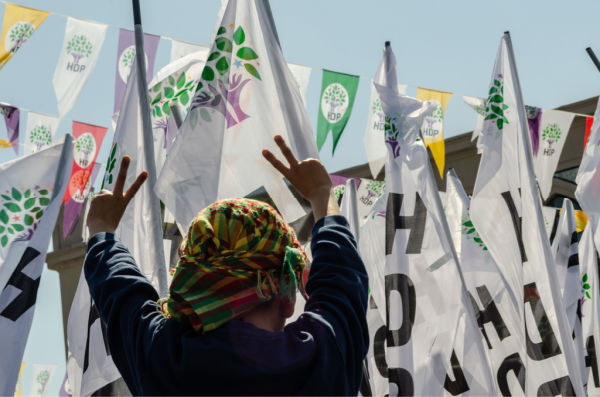
Turkey’s Kurds have the potential to play a key role in Turkey’s forthcoming presidential and parliamentary elections, which are due to be held in June 2023 at the latest. Their votes could be critical to Recep Tayyip Erdoğan’s hopes of securing a third term as president and are likely to determine whether the alliance between his Justice and Development Party (AKP) and the Nationalist Action Party (MHP) retains its parliamentary majority. But, with most of its leaders in prison or facing prosecution, its members expelled from virtually all of the local authorities they won in the last local elections and its main political party, the Peoples’ Democratic Party (HDP), facing closure by the Constitutional Court, the Kurdish political movement faces a major challenge in persuading its supporters of the relevance of casting their votes. The 2023 elections could be decided not so much by who Kurds vote for but how many go to the polls.
Closing Down Democracy – The Prosecution of the HDP

By Sarah Glynn
March 10, 2022
Despite the Turkish government’s current efforts to portray itself as a peacemaker who cannot countenance unprovoked aggression, its assault on the Kurds continues both within and beyond Turkey’s borders. Turkish democracy, always a sickly creature, is undergoing a judicial asphyxiation. Tens of thousands of opposition figures are in prison, including thousands of members of the third largest party in the Turkish Parliament, the pro-Kurdish, leftist Peoples’ Democratic Party (HDP). Two ongoing court cases could see leading party members jailed for life, and the enforced closure of the party. These cases commit the state even further to violent suppression of Kurdish hopes rather than a political solution.
Visit also