Öcalan’s Impasse: What’s next for the Kurdish Movement in Turkey?
By: Halil Karaveli
The peace process between the PKK and the Turkish state has imposed neutrality on the Kurdish political movement that for the past decade had invested in the opposition. Presumably, the Kurdish movement recognizes that President Recep Tayyip Erdoğan won’t accommodate its demands for Turkish-Kurdish equality. Yet the Kurds are nonetheless compelled to rely on Erdoğan’s goodwill. The founder of the PKK Abdullah Öcalan is at an impasse. To have any chance of achieving his professed objective -- a democratic, bi-national republic of Turkey – Öcalan will need to forge an alliance with Turkish progressives who distrust and shun him, and the agreement between him and Erdoğan has only made this harder.

BACKGROUND:
On August 10, the Turkish parliament with a vast majority passed a bill providing limited amnesty for demobilized militants of the Kurdistan Workers’ Party (PKK). While 468 lawmakers voted yes, only 88 voted no. 54 of those who rejected the bill hailed from the main opposition New Party – a majority of the party group -- and 29 from the nationalist opposition Good Party.
After waging an insurgency against the Turkish state since 1984, the PKK announced it was formally dissolving last year, following an order from its imprisoned founder Abdullah Öcalan. Öcalan, who won’t be included in the amnesty, praised the bill as heralding a process of democratization that is “as significant as the founding of the (Turkish) republic.” Meanwhile, the speaker of the Turkish parliament Numan Kurtulmuş proclaimed the end of Turkey’s longtime Kurdish issue and claimed that the “liquidation of the terrorist organization” and the amnesty bill presage unity and solidarity in Turkey. Others though were less cheerful.
There’s widespread suspicion in opposition circles that Öcalan, as part of the deal, has secretly agreed to endorse the reelection of President Recep Tayyip Erdoğan, an allegation that the representatives of the Kurdish political movement in Turkey have denied. And while the amnesty deal predictably drew the ire of die-hard Turkish nationalists, it has also brought to the surface the Turkish nationalism that animates much of the Turkish left, with the leader of the center-left New Party Özgür Özel, who voted yes to the bill, failing to sway the majority of his own party group.
Historically, reconciling leftist class politics and Turkish and Kurdish nationalisms has proved impossible, even though the Kurdish movement was initially part of the broader left in Turkey in the 1960s. But Turkish Marxists demanded that their Kurdish allies prioritize the class struggle and postpone the realization of their ethnic aspirations until the advent of socialism. Öcalan broke ranks with them and in 1978 launched an exclusively Kurdish revolutionary struggle for an independent and socialist Kurdistan, but he abandoned orthodox Marxism-Leninism after his imprisonment in 1999. In a message to the International Conference for Peace and Democratic Society in Istanbul last December, Öcalan called for “reclaiming socialism through peace and building a democratic society,” arguing that “actual existing socialism” has been a failure because it was “nothing but a reproduction of statist mentality.” Instead, “today the time has come to advance toward democratic emancipation on the basis of democratic society socialism,” Öcalan opined.
Yet it’s questionable that the specter of “democratic society socialism” stands any realistic chance of mobilizing wider support. It’s not only that leftist ideals enjoy scant appeal in Turkish society. Öcalan is hardly taken seriously at all by Turkish progressives – the left-wing Kurdish movement’s prospective allies -- who are convinced that Öcalan has now become an Erdoğan ally. Duran Kalkan, a member of the PKK leadership, lamented that the left and other democrats haven’t done enough to break the hold of “chauvinistic nationalism” and to mobilize societal support for peace. At best though, Öcalan’s motives and objectives are difficult to divine, and some statements attributed to him seemingly contradict his avowed objective of building grass-roots democracy. They intimate instead that the Kurdish leader privileges a top-down approach and seeks to forge an alliance with the repressive Turkish state.
Öcalan has on several occasions during the past decades hailed the accord in the 16th century between the Ottoman sultanate and Kurdish tribal leaders that secured Kurdish autonomy and helped tip the geopolitical balance in favor of the Ottomans and against Persia. Recent comments by him in the same vein have reinforced the perception that he has in mind a similar, mutually beneficial accord with the Turkish state today. Öcalan has also reportedly professed that the Kurdish movement will become “a pillar of the state, just like the Nationalist Movement Party (MHP) is.”
The cadres of the far-right MHP are entrenched in the state security apparatus and the leader of the MHP Devlet Bahçeli has been the main driver of the reconciliation process with the PKK. Counter-intuitively, the far right nationalist leader – who as deputy prime minister a quarter century ago insisted that Öcalan be executed -- and the Kurdish rebel leader have formed an unlikely political partnership. On October 10, Bahçeli reiterated his call that Öcalan be endowed with official status and appointed “coordinator” of the repatriation of process of the demobilized PKK militants.
IMPLICATIONS:
The fact that the founder of the PKK consented to disarm and dissolve the PKK without any prior agreement with Turkey has remained a source of speculation and has driven uncertainty about the current political process. When peace talks were held between 2013 and 2015, Öcalan refused to tell the PKK to lay down its weapons without a formal agreement with Turkey, saying “really, how do you drop armed struggle without an agreement? All over the world, in these sorts of conflicts, weapons are the last thing that gets dropped.”
Why, a decade later, has Öcalan seemed to abandon this condition? Öcalan always knew that without the threat of war there was little reason for Turkey to pay attention to the Kurdish cause. Ultimately, though, he was compelled to reverse course because the PKK had hit an impasse. The armed struggle had been faltering for years and could not match superior Turkish military technology.
Nonetheless, Öcalan is adamant that the dissolution of the PKK and the end of the armed struggle don’t amount to any capitulation. In a message to the Peace and Democratic Integration conference in London on September 29, Öcalan insisted that the Kurdish movement hasn’t surrendered and enumerated the core Kurdish demands: constitutional guarantees for the Kurdish language, culture and identity, local self-rule and the creation of conditions that will enable the participants in the armed struggle to assume responsibilities in democratic politics.
Reasonably, Öcalan recognizes that the regime of Erdoğan, which has cracked down on the Turkish main opposition and still keeps Kurdish politicians incarcerated, will not devolve power to the Kurds or countenance activism, however peaceful, for Kurdish rights and democratic reforms. But ultimately that may not matter to Öcalan who has developed an alternative strategy that seeks to operate outside of repressive state institutions. The rebel leader has earlier argued that the Kurds needed to grab power locally, create democratic institutions from the bottom up. Presumably, Öcalan views the militants who will now return home following the amnesty bill as the avant-garde of this people’s emancipation.
On the face of it, this strategy of democratic emancipation from below can’t be squared with what looks like an ambition to forge an alliance with the repressive Turkish state. But endeavoring to become a “pillar of the state” doesn’t necessarily imply that Kurdish democratic demands will be surrendered and that the Kurdish political movement will join the alliance that upholds the Erdoğan regime, as the Turkish opposition assumes it already has. It makes more sense to view Öcalan’s words about becoming a pillar of the state in light of his objective to reinvent Turkey as a state that belongs to the Kurds as much as to the Turks. Yet this still leaves the question of how the aspirations of the Kurdish political movement will be advanced unresolved.
CONCLUSION:
For the past decade, the Kurdish political movement in Turkey invested in the opposition, boosting the fortunes of the once presidential hopeful Ekrem İmamoğlu, who was elected mayor of Istanbul in 2019 and reelected in 2024 with crucial Kurdish support. The support of the Kurds also helped the main opposition party carry the local elections nationwide in 2024. That alliance now belongs to the past. The peace process between the Turkish state and the PKK has imposed neutrality on a Kurdish leadership that can ill afford to antagonize Erdoğan.
Presumably, the Kurdish movement recognizes that Erdoğan won’t accommodate its demands for Turkish-Kurdish equality. Yet the Kurds are nonetheless compelled to rely on Erdoğan’s goodwill. The opposition has no realistic chance of bringing down his regime and has moreover demonstrated its hostility toward the Kurds, voting against the amnesty bill for the PKK militants.
Öcalan is at an impasse. To have any chance of achieving his professed objective -- a democratic, bi-national republic of Turkey -- he will need to forge an alliance with Turkish progressives who distrust and shun him, and the agreement between him and Erdoğan has only made this harder.
Author's Bio:
Halil Karaveli is a senior fellow with the Central Asia-Caucasus Institute & Silk Road Studies Program Joint Center and the Editor of the Turkey Analyst. He is the author of Why Turkey is Authoritarian: From Atatürk to Erdoğan
With the Strait of Hormuz Blocked, Turkey Eyes Quicker Completion of the Development Road
By Emil Avdaliani
The Development Road – a 1200 km long project stretching from Turkey to the Persian Gulf via Iraq – could see renewed momentum for its realization. The blockade of the Strait of Hormuz compels Baghdad to look north for sea access via Turkey. For Turkey, the Development Road offers economic benefit, leverage over European supply chains and deeper influence in Iraq. The Hormuz crisis has strengthened Ankara's argument that overland corridors through Turkey are not optional but strategically necessary.

BACKGROUND:
The Development Road is a road-and-rail corridor stretching from Iraq’s southern ports near Basra northward to Turkey and then onto the European market. The project is estimated to cost around $17 billion and seeks to turn Iraq into a regional transit hub. Its core geopolitical purpose is to transform Iraq from a state heavily relying on oil exports and plagued by internal instability into a logistics bridge between Asia, the Gulf and Europe.
This is not the first time that the Development Road is being actively discussed. Iraq and Turkey have long expressed interest in the realization of the project. In Iraq, the ambition to position the country as a key transit artery originated in the Cold War era, but could not be realized during the turmoil of the last decades of Saddam Husein’s rule and the chaos that ensued the US invasion. But the Iraqi ambition also has deeper historical roots: the region served as a major transit route for ancient and medieval silk roads linking the Persian Gulf with the Mediterranean world.
Yet, what makes the present attempt to build the project more realistic is Turkey’s growing interest as a result of changed geopolitical circumstances. Turkey has been consistent in its support for the Development Road. One major factor that drives Ankara is the fear that it might be cut out from new routes of regional connectivity. The India-Middle East-Europe Economic Corridor (IMEC), which was proposed in September 2023 and is supported by the United States, Israel, the EU and key Middle Eastern countries explicitly bypassed Turkey.
To avoid being sidelined, Ankara announced the same year that it would double down on its efforts to develop the route through Iraq. Later in April 2024 a quadrilateral memorandum was inked between Iraq, Turkey, Qatar, and the United Arab Emirates during President Recep Tayyip Erdoğan’s visit to Iraq. That agreement provided the project a regional framework and brought Gulf capital into a corridor that had previously been exclusively Iraqi-Turkish.
Another factor benefiting the realization of the project is the Middle Eastern conflagration. With the Strait of Hormuz blocked and the Red Sea route under increasing threat, the chances of a successful implementation of the IMEC project are limited. The Iran war and the blockade of the Strait of Hormuz have deepened Turkey’s interest in accelerating the project and strengthened its argument that overland corridors through Turkey are not optional but strategically necessary.
Ankara wants to position itself as the northern outlet of Gulf trade and a central node between the Middle East and Europe. For Turkey, the Development Road offers economic benefit, leverage over European supply chains and deeper influence in Iraq. The economic rewards promise to be substantial: it is believed that the Development Road will add $55 billion over the next decade to the Turkish economy and create up to 70,000 jobs per year.
For Iraq too, this could be a golden political opportunity. Baghdad has long argued that the Development Road can diversify the economy, generate jobs and reduce reliance on hydrocarbons. The Hormuz crisis makes that argument more convincing to external partners. Europe sees the corridor as part of a broader strategy to reduce dependence on maritime supply routes. Meanwhile, the UAE and Qatar both now have stronger incentives to invest in overland logistics, dry ports and customs infrastructure. The fact that Qatar and the UAE joined the Development Road framework in 2024, well before the Hormuz crisis, is evidence that Gulf states were alert to the need to diversify their export routes.
IMPLICATIONS:
The disruption of the shipping through the Strait of Hormuz has had a significant effect on global shipping, particularly on the Middle East-Asia trade in oil and gas. Even if and when the Hormuz blockade is lifted, many Asian countries will be compelled to shift their oil and gas supply chains. While the Development Road would not fully replace Hormuz, especially not for crude oil and LNG flows, the project could see a boost to its development as a complementary overland corridor.
For Turkey the Development Road offers an opportunity to elevate its position as a central player in the Middle Eastern connectivity. The project would allow Ankara to incresase its engagement with the Persian and Gulf and eventually also beyond, to the Indian Ocean. This fits into the Turkish ambition of developing close relations with the wealthy Arab monarchies and to reconfigure the region’s trade routes so that they enhanceTurkey’s geopolitical clout.
In 2025 Iraq activated the TIR international transit system with pilot operations between Turkey’s Mersin and Iraq’s Umm Qasr Port. This is significant because it addresses one of the corridor’s core weaknesses: customs, paperwork, and border delays. Iraqi authorities also expanded the operation of the Al-Faw port which is scheduled to reach 3.5 million containers by 2028. This matters for Turkey because without Faw functioning as a major Gulf gateway, the Development Road’s impact will be limited.
Turkey’s Development Road ambitions also fit into a wider context of Turkish geostrategic expansion. In the South Caucasus, Ankara and Yerevan are pushing ahead with their stated goal to open up their long-closed common border and renew direct trade ties. Meanwhile Turkey strives to expand the Middle Corridor through Georgia, Azerbaijan to Central Asia. In Syria and Jordan, Ankara aspires to re-open the Hijaz railway linking the Anatolian heartland with the Arabian peninsula. In a northern direction Turkey serves as a primary commercial route for Russia for its trade with the Mediterranean world and parts of the African continent.
Yet, the Development Road is vulnerable to the disruption of maritime access to the Gulf as that inevitably will hamper trade with Asia. Iraq’s Grand Faw Port can only become a Europe-bound gateway if ships can safely enter the northern Gulf. A full blockade of Hormuz would therefore severely reduce Iraq’s links with the Indian Ocean. So, while the blockade of the Strait of Hormuz increases the strategic demand for an alternative such as the Development Road, it also undermines the project’s commercial potential.
At the same time, higher oil prices could increase Iraq’s fiscal revenues, offering Baghdad more room to fund infrastructure. On the other hand, insurance costs, energy-price volatility and anxiety among investors will raise the cost of capital. Construction materials, machinery and imported equipment risks becoming more expensive or delayed. If the Iran conflict escalates, international contractors may hesitate to work in southern Iraq, especially near Basra. The project already faces governance, security and coordination challenges, and the Hormuz crisis, should it continue indefinitely, will magnify all of them.
The security dimension is likewise important. The Development Road must pass through a country where armed groups, factional politics and external influence remain prevalent. The Hormuz blockade puts Iraq in a geopolitically delicate position. Tehran potentially could hinder the operation of a corridor that would limit Iran’s connectivity role in the region.
CONCLUSION:
The geopolitical situation in the Middle East has created favorable conditions for the Iraqi-Turkish Development Road. The India-Middle East-Europe Economic Corridor (IMEC) that the United States, Israel, the EU and key Middle Eastern countries favor has little chance of being realized any time soon. Meanwhile, the closure of the Strait of Hormuz has further elevated the role the Development Road could play.
The Iraqi - Turkish alternative is burdened by its own share of challenges, and the Hormuz blockade won’t necessarily accelerate the realization of the Development Road. Iraq remains plagued by instability, internal divisions and is vulnerable to Iranian meddling.
Yet, Turkey’s growing interest and commitment to the project, along with the pressing need to chart new routes of connectivity, can boost it. In any case, the Hormuz crisis has strengthened Ankara’s argument that overland corridors through Turkey are not optional but strategically necessary.
AUTHOR'S BIO:
Emil Avdaliani is a research fellow at the Turan Research Center and a professor of international relations at the European University in Tbilisi, Georgia. His research focuses on the hitory of silk roads and the interests of great powers in the Middle East and the Caucasus.
History Repeats Itself: The Subversion of the CHP
By Halil Karaveli
The Erdoğan regime has now introduced an innovation to the longstanding Turkish state tradition of party closures by appointing a trustee to lead the main opposition CHP. The CHP’s leader Özgür Özel was caught off-guard by the decision to depose him. His performance has been unsteady, perhaps because he senses that he has only unpromising options. Nonetheless, Özel needs to recognize that those who aspire to restore Turkish democracy no longer have any future in the CHP.
BACKGROUND:
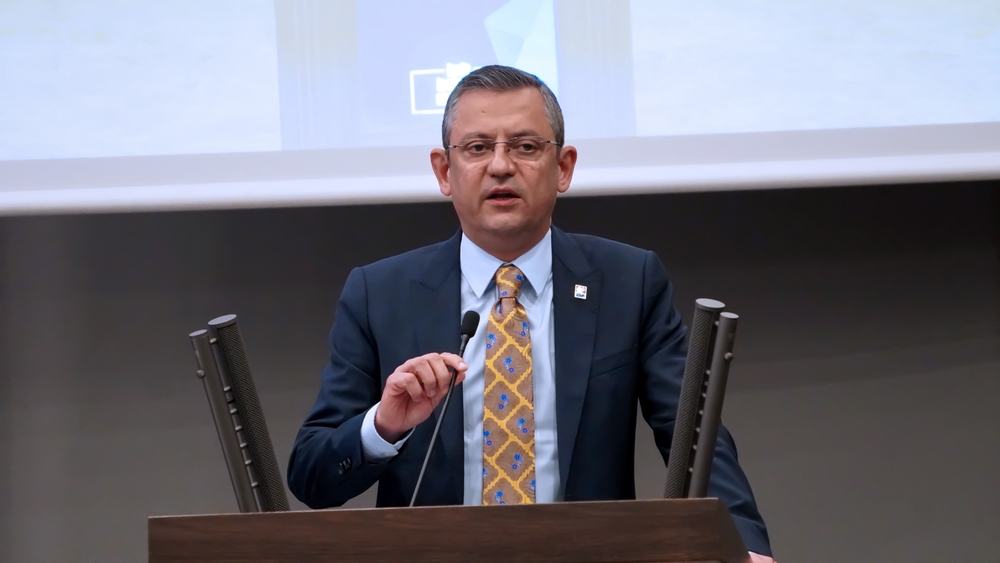
On May 21, an appeals court in Ankara removed the head of the main opposition center-left Republican People’s Party (CHP), Özgür Özel, by annulling the party’s 2023 leadership contest. The court credited the allegations that Özel’s victory was due to irregularities and misconduct and ordered that Özel should be replaced by his predecessor, Kemal Kılıçdaroğlu, CHP’s leader between 2010 and 2023, whom he defeated in 2023. Turkish legal experts contested the legality of the court ruling, pointing out that the appeals court had overstepped its jurisdiction, since according to the Turkish constitution the Supreme Electoral Board is the sole instance invested with the authority to cancel party elections.
Yet Turkey’s justice system has been weaponised against the opposition, and the decision to depose Özel represents but the final stage in the crackdown on the CHP that began a year ago with the arrest of the party’s presidential candidate, the mayor of Istanbul Ekrem İmamoğlu. Since then, scores of CHP mayors have been arrested, charged with corruption, while others have been enticed – or blackmailed -- to switch to the ruling Justice and Development Party (AKP). As a result, the results of the local elections in 2024, which the CHP carried, have largely been voided.
The CHP has still continued to enjoy a lead, albeit a narrowing one, in the polls, while some have the party falling behind the AKP. Nonetheless, President Recep Tayyip Erdoğan seeks to make sure that his reelection isn’t endangered. Özel succeeded in keeping protesters mobilized even though a protest fatigue has eventually set in. In a sign of the growing sense of resignation, Özel’s ouster as party leader so far hasn’t elicited any wider popular protests. That’s also because the struggle over the CHP doesn’t only pit the courts of the regime against the party’s elected leadership but equally the former, now re-appointed, party head and his successor against each other, making it seem to be an internal matter of a deeply split party.
Kılıçdaroğlu has consistently refused to admit the legitimacy of the election of Özel and has since sought to return as party leader. Kılıçdaroğlu’s vengefulness and the interest of Erdoğan in seeing the main opposition party consumed with internal strife converged. On May 25, police stormed the headquarters of the CHP where Özel had barricaded himself, after Kılıçdaroğlu’s lawyers requested his and his supporters’ eviction.
Özel’s performance since the court ordered his ouster has been unsteady, alternating between defiance and futile entreaties to Kılıçdaroğlu. He initially vowed to remain at the party headquarters, solemnly declaring that “I will stay in this building, I will not leave, until the CHP’s members have decided who’s going to lead the party.” Yet two days later, when the police stormed the building, Özel acquiesced to quietly leave it.
IMPLICATIONS:
Özel was apparently caught off-guard by the decision to depose him. “I never expected that they would go this far,” he confessed, betraying a surprising naïveté about a regime that doesn’t pull any punches and that has already shown that it will stop at nothing to crush the CHP. Özel has, it seems, neither taken the full measure of Erdoğan nor of Kılıçdaroğlu, and he has clearly underestimated their determination to get rid of him.
On May 26, he appealed to Kılıçdaroğlu to call a party election in which the CHP’s 2 million members would decide who should be party leader. Kılıçdaroğlu, who was already unpopular in the party and who is now deeply loathed, will certainly not consent to holding such an election. On May 27, Özel expressed the vain hope that Kılıçdaroğlu won’t “usurp power.” Kılıçdaroğlu’s statements though intimate that he has every intention to make full use of the power that he’s been handed, and that he intends to proceed to purge the CHP of the supposedly corrupt Özel and İmamoğlu loyalists. On May 27, Kılıçdaroğlu requested that Özel be removed as CHP parliamentary group leader, a post to which Özel was hurriedly appointed after he was deposed as party leader.
Ultimately, Özel will now have to recognize that those who aspire to restore Turkish democracy no longer have any future in the CHP. So far, Özel has refused to acknowledge that reality. “We’re not going to abandon the party,” he quipped. “How could we abandon the history, the brand of the CHP to a leadership that has been appointed by the palace (a reference to the Erdoğan regime)?” he rhetorically asked. (He could also have added the party treasury that Kılıçdaroğlu now controls to that list.)
His statement suggests that Özel, incredulously, thinks that he’s got a fair chance to wrest back the party from the regime, as if the circumstances were those of a normally functioning democracy. But Özel also seems to be cognizant that normal democratic rules have ceased to apply, noting that the CHP is now “de facto closed.” In a statement that suggests that he intends to pursue his struggle by extra-parliamentary means, he said “from now on we’ll primarily be in the streets, alongside the people.” But it’s doubtful that the people will be in the streets alongside Özel.
Özel has only unpromising options: If he remains in the CHP and tries to wage a rebellion against Kılıçdaroğlu, as his statements indicate he will, he has scant chance of reversing his fortunes, and he will only end up reinforcing the image of a chaotic party that is at war with itself, which will disqualify it as a viable alternative in the eyes of many voters. That is precisely what Erdoğan wants. If on the other hand, Özel opts to leave the CHP and starts a new party, he’ll also face insurmountable, not least financial, obstacles. “We are not going to start any new party,” he insisted on May 27. Yet he may ultimately have no other option -- however unpromising it is -- if he wants to remain politically relevant.
Nor can Özel realistically hope to achieve anything by taking to the streets, as he ostentatiously did after he had complied with the police order to leave the party headquarters. Özel led party loyalists in an eight kilometer walk to the parliament under pouring rain, at one occasion climbing over an armored police vehicle and defiantly posing with a clenched fist. While some opposition commentators touted that image – reminiscent of Boris Yeltsin’s famous climb on a tank during the coup attempt in Moscow 1991 -- as iconic and held that it “captured the moment of revolutionary crystallization,” Turkey is hardly on the brink of a revolution, something of which it has no tradition. Although dissatisfaction with the economy is widespread, a majority of the voters appreciate Erdoğan’s leadership in a time of unprecedented international turmoil while the détente with the Kurdish political movement ensures that no broad opposition alliance will emerge to challenge the regime.
CONCLUSION:
In a statement in 2024, after the CHP had defeated the AKP in the local elections, Özgür Özel commented that Turkey’s history shows that whenever the state and the people are in a contest, the people always wins. There’s some truth to that. The CHP, then the party of the state, lost in Turkey’s first free elections in 1950. In 1983, the voters rejected the party that the military junta had set up as its successor. In 2007, they rallied massively to the AKP after the military had tried to block the election of the AKP’s presidential candidate. But the people’s victories have also been voided before.
In the late 1970s, the CHP’s rule was subverted by the state and big business. The CHP had by then reinvented itself as the party of the popular masses and the downtrodden and won its biggest electoral victory to date. The CHP was subsequently closed by the military together with all other parties after the coup in 1980.
The Erdoğan regime has now introduced an innovation to the longstanding Turkish state tradition of party closures – a procedure that has historically primarily targeted Islamist and Kurdish parties – by appointing a trustee to lead the party that threatened to upend the established order.
The deeper lesson that Turkey’s history imparts is that the state can only be challenged successfully from the right. The state resisted the ascent of the Islamic conservative AKP but ultimately yielded; but the AKP that rose to power as the agent of the people against the state elite in turn eventually morphed into the party of the state. The enduring fate of the CHP, which has made the opposite journey, is instead to be neutralized by the state when it’s on the ascent.
AUTHOR'S BIO:
Halil Karaveli is a Senior Fellow with the Central Asia-Caucasus Institute & Silk Road Studies Program Joint Center and Editor of the Turkey Analyst. He is the author of Why Turkey is Authoritarian: From Atatürk to Erdoğan (Pluto Press).
The game changers in Turkish-U.S. relations
By Barçın Yinanç
Turkey’s President Recep Tayyip Erdoğan is known to be a leader who does not chew his words, especially when targeting Western leaders. Yet although an overwhelming majority of the Turkish public opinion is strongly critical of the U.S.-Israeli war against Iran, Erdoğan has conspicuously withheld any criticism of Washington. The Turkish leadership has offered invaluable assistance to Trump’s plans for Gaza, and Washington has accommodated Turkey in Syria and tacitly bestowed legitimacy on Erdoğan’s domestic oppression. However, the central challenge for U.S.–Turkey relations will remain the management of tensions between two of Washington’s most important Middle Eastern allies, Israel and Turkey.
BACKGROUND:
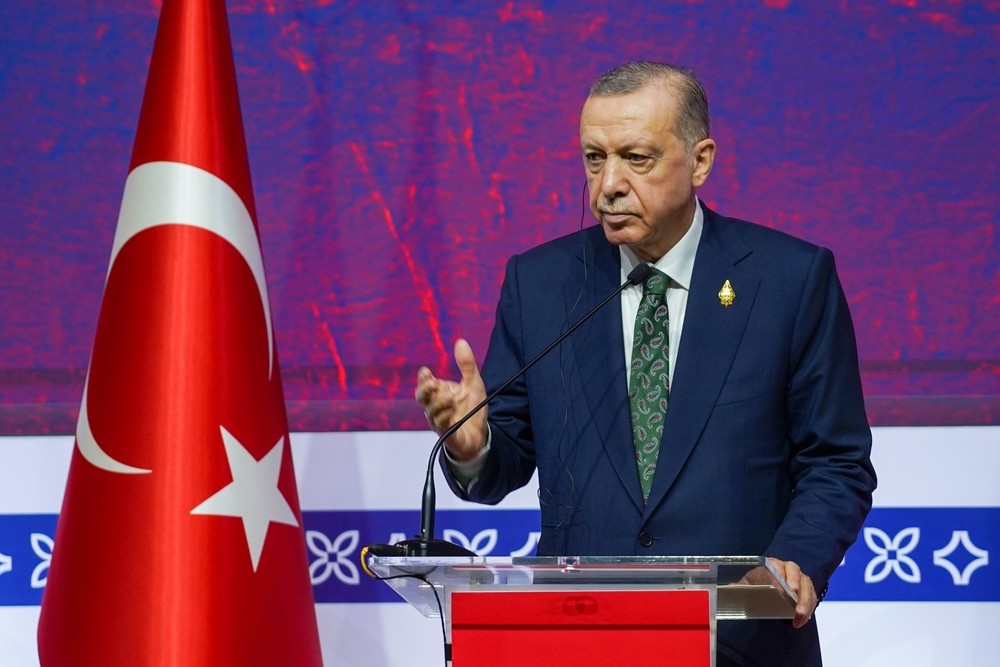
Trump and Erdoğan had already set up a good rapport during Trump’s first term, and U.S. president’s favorable view of Erdoğan facilitates addressing long-standing strains in bilateral ties. Yet it was the fall of Bashar al-Assad in Syria 2024 that proved to be the real game-changer in the American-Turkish relation. Trump’s decision early on to open credit to Syria’s interim president Ahmed al-Shara, the former jihadist rebel leader and a Turkish protégé, led to a constructive cooperation on a key priority area for Ankara. More importantly, Washington’s change of strategy concerning the People’s Protection Units (YPG), considered by Ankara to be the Syrian wing of the Kurdistan Workers’ Party (PKK), proved to be the key dynamic as a course correction.
U.S. political and military support to the YPG poisoned Turkish-American relations for more than a decade. Washington claimed to partner with the YPG to fight the so called Islamic State while Ankara accused its ally of backing a Kurdish armed group, thereby paving the way for the establishment of a Kurdish entity in its southern border. In January this year, Tom Barrack, the U.S. ambassador to Ankara and Trump’s special envoy to Syria, announced YPG’s mission to be accomplished, removing the major obstacle to improved U.S.-Turkey relations. “The original purpose of the SDF as the primary anti-ISIS force on the ground has largely expired, as Damascus is now both willing and positioned to take over security responsibilities, including control of ISIS detention facilities and camps,” he stated.
Speaking during the Antalya Diplomacy Forum on April 17, Barrack praised Turkey and Erdoğan and appeared to be siding with Turkey – and Syria -- against Israel. Barrack took issue with Israel’s view of Syria and Turkey as adversaries, rather than potential partners, calling it a “strategic mistake.” Israel deployed troops to southern Syria in the wake of Assad’s ouster, and has bombed military facilities in the country. Barrack lamented the constant Israeli incursions that threaten to destabilize the al-Sharaa regime and clash with Turkey’s interests. Israeli representatives have also repeatedly expressed support for Kurdish aspirations, raising concerns in Ankara. Barrack said that he’s been consistent in telling Israel that the “inclusion” of Turkey is the “only answer” to securing the ceasefire in Gaza.
While Trump prioritizes the security of Israel, bringing stability in the Middle East requires the normalization of Israel’s relations with its neighbors. Achieving this, however, necessitates managing, if not resolving comprehensively, the Palestinian issue. In that respect, Turkey plays a crucial role and has already offered valuable services. As the most vocal critic of Israel and a staunch defender of Hamas, Erdoğan’s endorsement of the plan that foresaw the end of Hamas’ rule in Gaza was invaluable and bestowed legitimacy to Trump’s plan. Not only did Erdoğan sign on to Trump’s plan, becoming one of the four leaders signing a declaration in Sharm el-Sheikh, Egypt, but he also used Turkey’s leverage over Hamas. If Trump was instrumental in convincing Israeli Prime Minister Benjamin Netanyahu to accept the plan, Turkey’s pressure was crucial in securing Hamas’ acquiescence.
Barrack recalled that Trump called Erdoğan shortly before the ceasefire in Gaza was reached last October, asking for his assistance in bringing two leaders of Hamas on board. It would not have happened without the efforts of Erdoğan, Fidan and National Intelligence chief Ibrahim Kalin, Barrack emphasized.
IMPLICATIONS:
It is not a coincidence that, Erdoğan – who never received an invitation during Joe Biden’s term – was finally gratified with an invitation to and entered the Oval Office two days after he endorsed Trump’s plans for Gaza. Meanwhile, a statement by ambassador Barrack right before Erdoğan’s visit laid down openly the gist of U.S.-Turkish relations, with Barrack remarking that “President Trump says, let’s give them what they need, legitimacy.” The statement, which presumably alluded to the need to rehabilitate Erdoğan’s image in Washington, also implied turning a blind eye to and legitimizing Erdoğan’s domestic transgressions. Washington has remained silent as Turkey has been witnessing one of the most severe waves of political repression in its history, targeting the main opposition party.
Meanwhile, the Turkish leadership provides legitimacy to Trump’s plans for the Middle East. Turkey’s decision to use its leverage over Hamas has in return been rewarded by the U.S. Not only has Washington ended its decade-long support to the Kurdish YPG, but the Trump administration has also green-lighted a solution to the longstanding Halkbank issue between the U.S. and Turkey. The agreement over Turkish state-owned Halkbank, which stands accused of evading U.S. sanctions on Iran, was revealed in early March. Not coincidentally, Turkish officials abstained from expressing any criticism of the U.S. for the war against Iran. This also bespeaks Ankara’s wish to mediate between Washington and Tehran and Turkey contributed to the mediation efforts that were led by Pakistan together with Egypt and Saudi Arabia. Meanwhile, the Iran war has revealed Turkish defense vulnerabilities. The package deal with the U.S. that includes modernization kits for Turkey’s existing F-16 fleet as well as the procurement of a new batch of F-16s comes at a high cost, and Ankara seeks a discounted offer. Also, there has been no progress on the F-35 issue, with Ankara blaming the Israeli lobby for the stalemate. Turkey is eager to be allowed to return to the program from which it was expelled following its purchase of the Russian S-400 air defense system.
Delays in the delivery of the initial engines for Turkey’s domestically produced fighter jet Kaan have further heightened concerns in Ankara. These setbacks exacerbate Turkey’s growing airpower vulnerability at a moment when global politics is increasingly unstable and unpredictable.
CONCLUSION:
It was consistent with President Trump’s leadership style to disengage from an armed non-state actor – the Kurds in Syria -- and instead rely on a middle power like Turkey, particularly as Washington seeks to delegate the stabilization of key regions to allies and partners. In the short to medium term, however, the central challenge for U.S.–Turkey relations will remain the management of tensions between two of Washington’s most important Middle Eastern allies, Israel and Turkey.
Turkey and Israel pursue fundamentally divergent policies in Syria, as the latter wants a weak and fragmented Syria. At present, Ankara appears to have drawn Washington closer to its own position. However, the fragile nature of the deal between Damascus and YPG as well as that between Syria and Israel remains a potential irritant. This is also important in view of the new process initiated to solve the decades old Kurdish problem.
Moreover, Israel’s approach to implementing the second stage of Trump’s Gaza plan is highly problematic. Turkey has reciprocated U.S. disengagement from the Kurdish YPG by encouraging Hamas to accept a framework that remains ambiguous about the protection of Palestinian rights. Ankara though will find it difficult to pressure Hamas to remain loyal to the plan in the face of Israel’s policies in Gaza and in the West Bank. Israel’s quest for regional supremacy threatens to impede Erdoğan’s collaboration with Trump.
And if Trump meant to improve Erdoğan’s standing among Washington’s circles by bestowing legitimacy on him, this remains unfulfilled as Congress is still highly hostile to Turkey, which explains the continuation of the stalemate in defense ties.
AUTHOR'S BIO:
Barçın Yinanç is a foreign policy commentator at the Turkish news site t24.
Turkey’s Drone Diplomacy: How Erdoğan Frames His Most Vital Asset in His Foreign Policy Toolkit
By Juliette Oliver
Over the last two decades, Turkey has seized the opportunity for low-cost military dominance through the development of its indigenous drone and weapons programs. Turkey has risen to drone superstardom, utilizing its defense industry proactively as a hard power abroad in a quest to strengthen its place and position during global turmoil. Turkey seeks to limit reliance on Western partners and increase national independence through technological sovereignty. The rhetoric framing Ankara's exports, however, differs dramatically from conflict to conflict, such as in Russia’s war in Ukraine and in the Second Nagorno-Karabakh War. Such shifts demonstrate an increasingly flexible, albeit complicated, drone diplomacy. Turkey uses private military companies and their drone exports to align or distance itself with buyer-states, heightening complexity around how to hold it accountable for its role in international conflicts.
BACKGROUND:
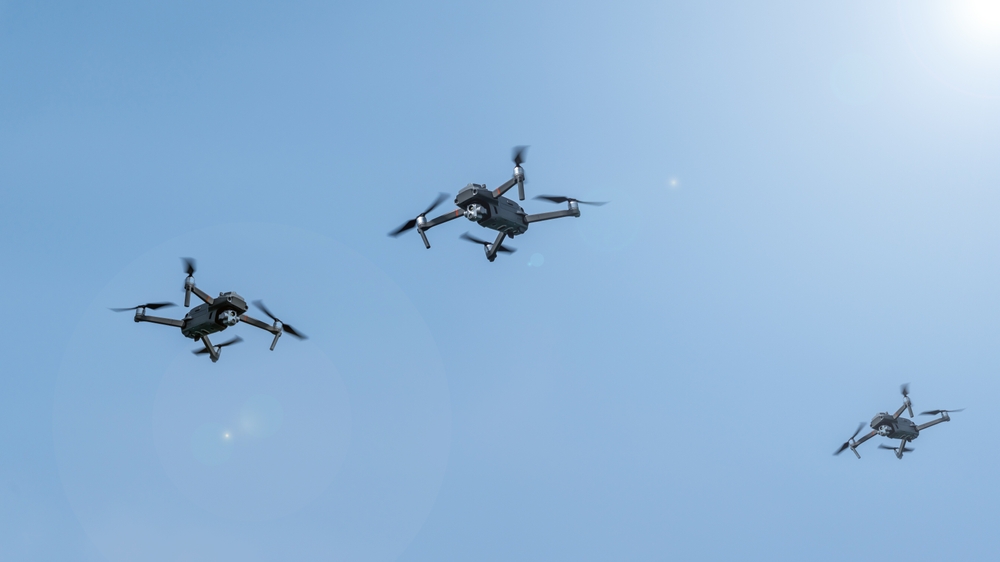
Ankara’s inaugural test flight of the infamous Bayraktar TB2 in 2014, proved a revolutionary turning point in Turkey’s impressive indigenous military development. Since then, Turkish Armed Forces have accelerated production and pushed the bar of UAV manufacturing and supply self-sufficiency. In 2023, Turkey produced almost 80% of its own military parts and weaponry. These arms initiatives are instruments for strengthening national security, which Turkish President Recep Tayyip Erdoğan underscored at a ceremony in Ankara on February 24, 2026 for Turkey’s newest addition to the autonomous weapons family, the Sancar unmanned naval vehicle.
Conflicts such as the Second Nagorno-Karabakh war and Russia’s full-scale invasion of Ukraine have become battlegrounds for drones, as well as testing sites for Erdoğan's new hard power diplomacy. Turkey has shifted its rhetoric across these conflicts, framing drone exports from purely arms trade to intense cooperation with allies. Ankara demonstrates the flexibility that drone diplomacy provides and the effort Erdoğan is willing to put in to reap maximum benefits from its engagement.
The 2020 Second Nagorno-Karabakh War illustrates Turkey’s most direct application of drone-enabled power. At the outset of hostilities, Erdoğan declared “It’s time to pay,” backing Azerbaijan’s demands that Armenia withdraw from Nagorno-Karabakh. After Azerbaijan's successful efforts to retake the territory, Erdoğan later attempted to align himself closely with the victory, claiming, “Together with our Azerbaijani brothers, we completely eliminated the enemy forces.”
While at first praising Turkish military support, an article in Azerbaijan’s official newspaper expressed frustration at perceived Turkish exploitation of its victory, commenting, “Our people, army, and commander view with disappointment and deep sorrow the attempts to claim and take ownership of our rightful victory. Azerbaijan’s victory is for the entire Turkic world, but Türkiye is not its architect.” Nagorno-Karabakh demonstrates how Turkey uses drone exports to both shape battlefield outcomes and construct narratives of military competence and regional leadership, notwithstanding tension with allies who resent its exploitative efforts.
In stark contrast, Turkey’s approach to Russia’s invasion of Ukraine reflects a more cautious and flexible strategy. Unlike most NATO members, Turkey did not impose comprehensive sanctions on Russia. It instead maintains a position of cooperative rivalry. Within this framework, Turkey has sought to position itself as a mediator while continuing defense exports to Ukraine. Turkish officials have emphasized the private, rather than governmental, nature of drone sales. Deputy Foreign Minister Yavuz Selim Kıran stated, “Kyiv purchased the drones from Baykar, a private Turkish defense company,” while then Foreign Minister Mevlüt Çavuşoğlu asserted, “If a country buys [weapons] from us, they are no longer Turkish.” These statements aim to create distance between the state and the consequences of drone deployment despite Turkey having serious stakes in Ukraine’s successful defense against Russian aggression. Russia has rejected this framing, and the then-Russian Ambassador Alexey Yerkhov responded that “Explanations like ‘business is business’ will not work, since your drones are killing our soldiers.”
This exchange underscores the limits of plausible deniability when private firms are closely linked to national strategy and foreign policy. Although Ankara frames drone exports as private transactions, the relationship between state and industry in Turkey is deeply intertwined. Defense firms operate within a system shaped by government contracts, which are incentivized and only given to Erdoğan loyalists and those politically aligned with his regime. The prominence of Baykar, producer of the Bayraktar TB2, exemplifies this dynamic, as one of the most prolific defense companies is run by Erdoğan’s son-in-law, Selçuk Bayraktar.
This structure allows Ankara to project influence indirectly. Channeling military exports through nominally private firms enables Ankara to expand its strategic reach while limiting formal accountability. In practice, these companies function as extensions of state policy, advancing both domestic and foreign objectives.
IMPLICATIONS:
Turkey’s rise as a drone power reflects a broader transformation in its strategic identity. Moving beyond dependence on Western suppliers, it has leveraged indigenous defense development to expand its autonomy and influence. Turkey’s hybrid drone diplomacy allows it to openly align with partners, such as with Azerbaijan in the case of Nagorno-Karabakh, or maintain distance, as it has done in the case of Ukraine. Across both contexts, drones enable a form of indirect power projection that blends military effectiveness with strategic narrative-building.
Other countries have already taken notice, and have either condemned the spread of Turkish drones to their neighborhood or embraced the opportunity to bolster their respective capabilities. In February 2026, the Turkish arms supplier Mechanical and Chemical Industry Corporation (MKE) signed a major export agreement with the Egyptian Ministry of Defense for $350 million, which includes the sale of ammunition and joint procurement of drones. Israel was quick to denounce such agreements, believing these developments signal efforts not only to seek reconciliation with former regional rivals, but to create a coordinated political and strategic bloc described as a “Sunni ring” militarily surrounding Israel. The extensive efforts that Turkey is making to compartmentalize its private military and public governmental sphere provide it with a back door and leave other countries struggling with how to respond. Israel for instance has opted for a strategy of challenging Turkey’s trade in the region with its own and through containment.
These occurrences will only increase as Turkey pushes full steam ahead to capitalize on its drone diplomacy as a means for normalization with other countries. It will become increasingly more difficult to hold Turkey accountable for its arms exports as these systems and relationships expand. Turkey's evolving and increasingly active posture in regional military affairs motivates countries in the West, including the United States, to develop their military industries and compete on the global stage. Recognizing that the future of domestic securitization will progressively be ensured by autonomous weaponry, the U.S. will be forced to compete with -- rather than solely confront -- Turkey, which in the past was the initial reason for development of autonomous weapons.
CONCLUSION:
Turkey’s drone diplomacy reveals not just a shift in military capability, but a recalibration of how power is projected while diffusing accountability. By leveraging nominally private defense firms to advance strategic objectives, Ankara has constructed a flexible model of influence that adapts across conflicts while complicating international responses.
Turkey’s approach offers a template for indirect, deniable power projection in contemporary warfare. This in turn incites other countries to refine their own diplomatic framework in parallel with the foreign drone market in order to keep pace with and adapt to the contemporary era of drone diplomacy.
AUTHOR'S BIO:
Juliette Oliver is a researcher with the American Foreign Policy Council and is pursuing her master’s degree in Eurasian studies.
Visit also