Bursali: the Kurds are breaking away from Turkey
Orhan Bursalı in Cumhuriyet calls attention to a statement made by Kurdish leader Cemil Bayık: “No one can force us to pull out the guerilla from the north (from Turkey) or force us to lay down our arms. These are things that are never going to happen.” The leaders of the PKK/KCK have embraced the opportunity that has been offered them in Syrian Kurdistan; they are strengthening their positions there (through the PYD and with the help of the U.S. and the West); the focus of their policies is primarily to view Southeastern and Eastern Anatolia as forming one unit together with Syrian Kurdistan. The proclamations of “self-rule” in two provinces and six counties are not only a result of the [Turkish air force] bombings [of Kandil]; this is something for which they have prepared for a long time. The proclamations of Kurdish “self-rules” are one step: the message is “We don’t recognize the central government in Ankara.” They speak of “Revolutionary people’s war.” This means that we can expect smaller and bigger uprisings with the participation of the masses. It appears that the PKK/KCK has opted for policies that break off the bonds with Turkey.
Öztürk: the PKK is winning the public relations war
Kemal Öztürk in Yeni Şafak warns that the AKP is losing the public relation battle. The PKK/KCK/HDP coalition and the municipalities, associations, foundations, newspapers, radios and internet sites that it controls in the southeast have started a massive campaign, blaming all the deaths on the president and the AKP. This campaign is having a devastating effect on public opinion. Just as happened before the election, the public is turning against the AKP and the government. We also need to face the bitter truth: the discourse of the PKK is receiving much more attention in international media than the arguments of the government. I did not expect that the operations that are being undertaken to secure law and order in the cities would have a negative impact on the Kurdish people. But the PKK’s communication tactics and sustained efforts could undermine this expectation. The AKP needs to assure the people that the fight against terrorism is one thing and the solution process is something different. If the AKP fails to explain why it is fighting terror, what it is doing for the solution process, what it plans to do for the Kurdish people, it risks yet another election disaster.
Erdoğan’s War: The Causes and Consequences of the Upsurge in Kurdish Violence
By Gareth Jenkins (vol. 8, no. 15 of the Turkey Analyst)
In recent weeks, Turkey has been wracked by an escalation in Kurdish-related violence. Not only could the upsurge have been prevented but there are fears that the worst may yet be to come. The fear is that President Recep Tayyip Erdoğan may order an even harsher crackdown over the weeks ahead and that, with its rural units depleted by deployments to Iraq and Syria, the PKK may increasingly respond by staging attacks, including more suicide car bombings, in the cities.
The Kurdish Surge in Turkey’s Election: A Boost in Backing for the PKK

By Aliza Marcus (vol. 8, no. 12 of the Turkey Analyst)
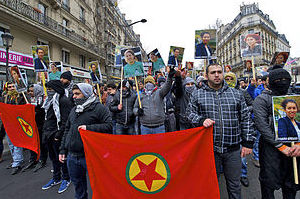
Kurdish voters abandoned the ruling AKP in Turkey's national elections, propelling the Kurdish HDP into parliament and giving Kurdish nationalist demands a new legitimacy. Earlier, critics could argue the PKK did not really represent the majority of Kurds in Turkey, but that argument is getting weaker by the day. The HDP's win can be ascribed, in large part, to a boost in backing for the PKK. The question is whether the parties and people who want more rights and freedoms will realize that Kurdish rights, autonomy and likely freedom for Abdullah Öcalan must be part of this to truly make Turkey into a liberal place.
What the Columnists Say

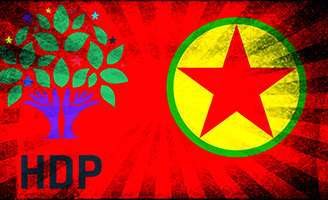
İbrahim Karagül, the editor in chief of Yeni Şafak, writes that AKP’s enemies in the West, the Fethullah Gülen fraternity, big business in Turkey and the “Gezi saboteurs” have formed an alliance to overthrow the Turkish government by starting an Alevi uprising. He writes that the terrorist group DHKP-C has been charged with the function as the armed wing of this alleged coalition and that the killing of a prosecutor in Istanbul last week was the first act in a scheme to start a sectarian violence. Mümtazer Türköne in Zaman writes that terrorism is going to benefit the AKP government and he asks “What acts of terrorism are you planning during the run-up to the elections?” He writes, “The martyrdom of the prosecutor was a cause for great satisfaction among the ruling circles.” Hakan Aksay on the t24 news site notes with alarm that Selahattin Demirtaş, the co-chairman of the pro-Kurdish HDP in a speech recently evoked the risk that he might be killed during the election campaign. Orhan Bursalı in Cumhuriyet argues that the Kurds are going to consent to the introduction of presidential system that Erdoğan covets, in return for recognition of their identity and autonomy, but that AKP-PKK are never going to be able to impose their constitution on a majority that resists it.
Visit also




Joint Center Publications
Op-ed Halil Karaveli "The Rise and Rise of the Turkish Right", The New York Times, April 8, 2019
Analysis Halil Karaveli "The Myth of Erdogan's Power", Foreign Policy, August 29, 2018
Analysis Svante E. Cornell, A Road to Understanding in Syria? The U.S. and Turkey, The American Interest, June 2018
Op-ed Halil Karaveli "Erdogan Wins Reelection", Foreign Affairs, June 25, 2018
Article Halil Karaveli "Will the Kurdish Question Secure Erdogan's Re-election?", Turkey Analyst, June 18, 2018
Research Article Svante E. Cornell "Erbakan, Kisakürek, and the Mainstreaming of Extremism in Turkey", Current Trends in Islamist Ideology, June 2018
Analysis Svante E. Cornell "The U.S. and Turkey: Past the Point of No Return?", The American Interest, February 1, 2018
Op-ed Svante E. Cornell "Erdogan's Turkey: the Role of a Little Known Islamic Poet", Breaking Defense, January 2, 2018
Research Article Halil Karaveli "Turkey's Authoritarian Legacy", Cairo Review of Global Affairs, January 2, 2018