The Growing Alignment of Turkey and Saudi Arabia
By Emil Avdaliani
Turkey and Saudi Arabia have pledged to elevate bilateral relations by expanding cooperation in defense and renewable energy spheres, marking a new page in bilateral relations. Turkey’s engagement with Saudi Arabia is expected to grow as the two countries’ geopolitical ambitions align from Syria to Sudan to Yemen. For Turkey, boosting the relations with Saudi Arabia fits into its broader effort of containing Israel and improving ties with key Middle East actors. Given that Saudi Arabia too has much at stake in Syria’s economic and political rehabilitation as well as in the Horn of Africa, its alignment with Ankara is now accelerating at a full speed. Another key driver of the growing alignment between the two countries has been their expanding military cooperation. The Saudi-Turkish alignment is also about the middle power activism, based on the recognition that a multi-aligned foreign policy is the order of the day, providing space and opportunities for geopolitical maneuvering. Nonetheless, Turkey and Saudi Arabia will refrain from building an official alliance as it would limit their freedom of maneuvering.
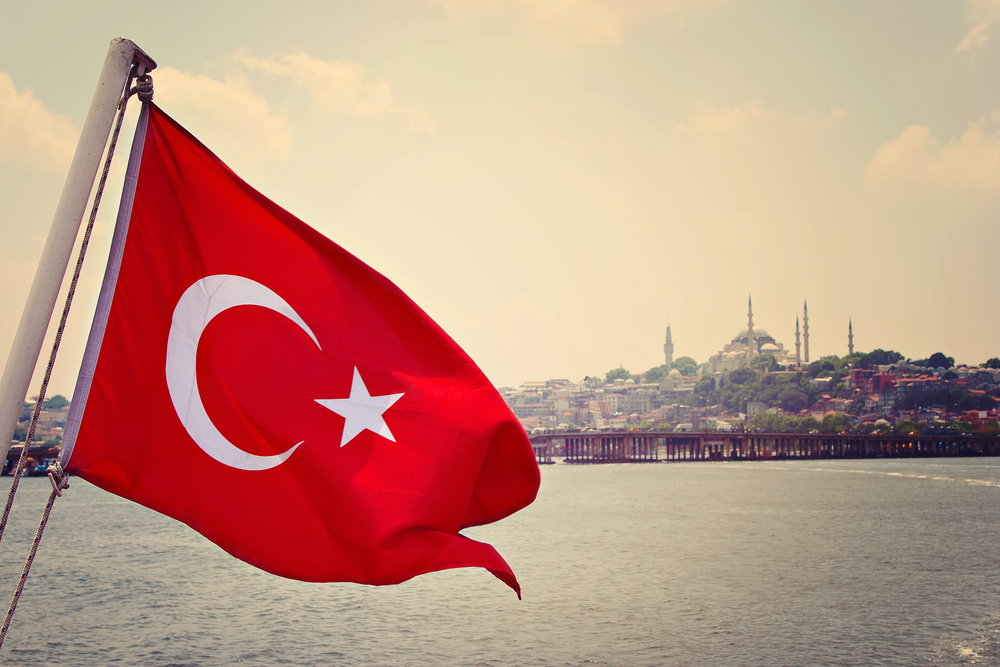
BACKGROUND: On February 3, Turkey’s President Recep Tayyip Erdoğan visited Riyadh where he met Saudi Arabia’s Crown Prince Mohammed bin Salman. The two sides pledged to elevate bilateral relations by expanding cooperation in defense and renewable energy spheres marking a new page in bilateral relations.
The two countries have not always enjoyed positive ties. In the recent past, divergent strategic visions on most of the conflicts in the Middle East kept Riyadh and Ankara apart. By 2021, however, the strategic environment shifted. Turkey’s outreach to its regional competitors –including Saudi Arabia – began amid a “de-escalation moment,” driven by economic constraints after the pandemic and uncertainty about long-term United States security commitments.
One of the key drivers of the growing alignment between the two countries has been the expanding military cooperation. Riyadh wants to become less dependent on foreign supplies of military hardware and boost domestic military production. As a major military exporter, Turkey’s experience in know-how is key in that regard. The two countries have signed a string of military deals over the past few years. For instance, during President Erdoğan’s tour of the Gulf countries in 2023, Saudi Arabia agreed to buy Turkish drones; moreover, the package was explicitly tied to industrial cooperation such as technology transfer and joint production leading to long-term high-technology development. Later the same year, the Saudi side announced a strategic agreement with the Turkish defense producer Baykar to localize drone manufacturing in the kingdom. Another area of ongoing cooperation is joint investment in Turkey’s KAAN fighter project.
There is also a burgeoning cooperation in renewable-energy sphere. Turkey and Saudi Arabia have now signed an agreement which will involve Saudi investment of $2 billion to build two 1,000MW solar farms in Sivas and Karaman (2,000MW first phase) in Turkey. The joint statement released by the Turkish and Saudi leaders also emphasized cooperation on grid interconnection feasibility studies, energy storage, energy efficiency, and clean hydrogen. Relatedly, bilateral trade had reached $8 billion in 2025 and around 400 projects in Saudi Arabia worth more than $30 billion were carried out through the involvement of Turkish companies.
This strategic pragmatism is embodied Saudi Arabia’s Vision 2030. The pursuit of economic diversification and local defense-industrial capacity has created incentives to engage a capable regional producer (Turkey) rather than relying exclusively on traditional Western suppliers, while also preserving flexibility in an increasingly multipolar environment. This logic is evident in the emphasis on technology transfer and localisation in the defence relationship, and in expanding energy cooperation beyond hydrocarbons into renewables.
IMPLICATIONS: Crucially, there is also a wider geopolitical context that is pushing Turkey and Saudi Arabia closer. Across the Middle East, from Yemen to Iran to Syria, the two countries’ foreign policies are increasingly aligned. Ankara and Riyadh have both opposed Israel’s war in Gaza. This is not only out of Islamic solidarity but more based on shared strategic calculations, chiefly to contain Israel. The latter’s military power and regional influence has grown since 2023 when the war in Gaza broke out. Since then, the Jewish state has defeated Iran’s allies, Hezbollah and Hamas and intermittently bombed the Houthis in Yemen, also part of the Iran-backed Axis of Resistance. And since the downfall of the Assad regime in Syria, Israel has carried out a systemic aerial campaigning against military assets across Syria. Tel-Aviv’s calculus has been clear. It has acted against the growing Turkish influence in Syria.
Israel’s projection of power reached the Persian Gulf when Hamas’ representation in Doha was targeted shattering the sense of security in the region as the United States, which has a military base in Qatar, stood by. In late 2025 Tel-Aviv recognized the breakaway Somaliland as independent state signaling Israel’s intentions in the Horn of Africa. Israel’s goal is to move as closely as possible to Yemen to better target and contain the Houthis. Yet, the move is ultimately also about containing Turkey’s ambitions in Somalia, Sudan and Ethiopia. Containing Israel, therefore, now a key foreign policy goal of Turkey and given that Saudi Arabia too has much at stake in Syria’s economic and political rehabilitation as well as in the Horn of Africa, its alignment with Ankara is now accelerating at a full speed.
Turkey and Saudi Arabia align around the idea of a united Yemen and are determined to thwart the secessionism in the south of the country. Ankara and Riyadh share a similar approach in relation to Sudan and especially regarding Syria, where President Ahmed al-Sharaa has been supported by Turkey and Saudi Arabia in his endeavor to bring the Kurds into the central state’s fold.
Riyadh’s openness to expand relations with Turkey is also linked to the kingdom’s ongoing tensions with the United Arab Emirates. Saudi Arabia wants to balance Abu-Dhabi, and Ankara is a good candidate in that regard. Moreover, Turkey itself has strategic interests in the regions -- from Yemen to the Horn of Africa -- where the Saudi-UAE rift has materialized and has increased its engagement through military and economic cooperation. Neither Ankara nor Riyadh want to see a nuclear Iran, but oppose a U.S. attack against Iran as a weakened and destabilized Iran would further shift the regional balance of power in Israel’s favor.
While moving closer, Turkey and Saudi Arabia nonetheless remain hesitant to form an official alliance as a formalized relationship would constrain their freedom of maneuver. Although there have been reports that Turkey has exhibited an interest in joining the Saudi-Pakistani military alliance, Ankara has allegedly refrained from doing so.
Turkey is a NATO member and joining the Saudi-Pakistan alliance would have brought additional security responsibilities that Ankara does not want to take on officially, notwithstanding that Turkey’s relations with Pakistan have reached unprecedented highs whether in security, military or economic spheres. Thus, the ongoing alignment should not be mistaken for a formal alliance in the making. It rests on a convergence of interests – regional stability, autonomy from great-power constraints -- and offers mutually beneficial economic opportunities; it is pragmatic and not ideological.
CONCLUSION: For Turkey, boosting the relations with Saudi Arabia fits into its broader effort of containing Israel and improving ties with key Middle East actors. It was therefore no coincidence that Turkish President Erdoğan after his trip to Saudi Arabia visited Egypt, a major regional player involved in the efforts to bring the war in Gaza to an end.
The Saudi-Turkish alignment is also about the middle power activism. Both Turkey and Saudi Arabia are key middle-powers and actors in the Middle East, and their alignment is ultimately boosted by a shared understanding that the world has entered into a multipolar period where multi-aligned foreign policy is the order of the day, providing space and opportunities for geopolitical maneuvering.
AUTHOR'S BIO: Emil Avdaliani is a research fellow at the Turan Research Center and a professor of international relations at the European University in Tbilisi, Georgia. His research focuses on the history of the Silk Roads and the interests of great powers in the Middle East and the Caucasus.
Turkey Seeks to Counter Russia in the Black Sea-Caucasus Region
By Emil Avdaliani
October 5, 2020
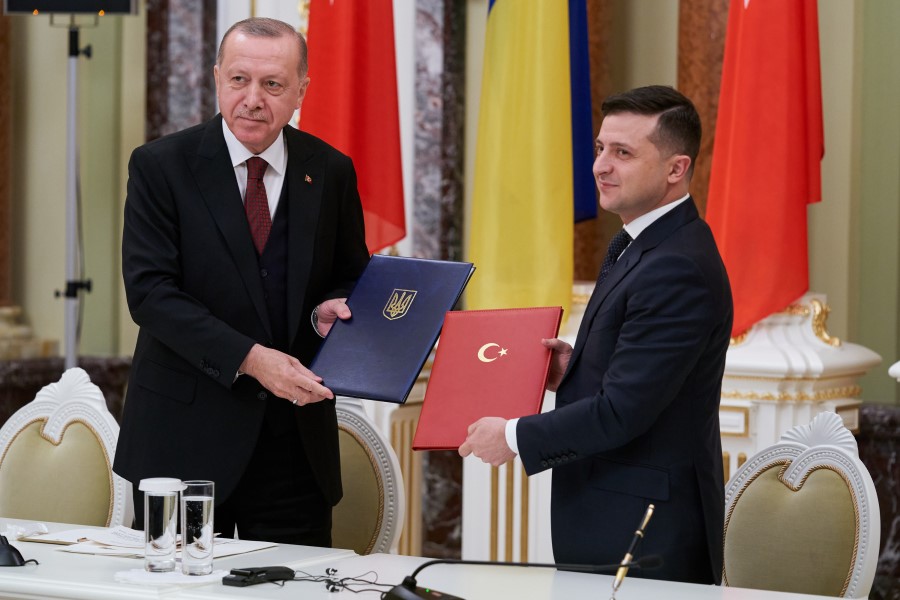
Turkey increasingly views Ukraine, Georgia and Azerbaijan as parts of an arc that could help it balance Russia’s growing military presence in the Black Sea and in the South Caucasus. With this objective in mind, Ankara is stepping up its military cooperation not only with Baku, but also with Tbilisi and Kyiv. Turkey is signaling that it intends to play a far more active role in the Black Sea-Caucasus region in order to contain Russia’s influence. This regional strategy has wider implications as it demonstrates that Turkey, contrary to what has become a common perception in the West, is not moving closer toward Russia and that in fact Turkish and the Western geopolitical interests largely converge, with Turkey supporting Georgia’s NATO ambitions.
Turkey’s Blue Homeland Doctrine: Signaling Perpetual Conflict in the Mediterranean and Rough Waters Ahead
By Cengiz Çandar
August 26, 2020
Turkey’s and Greece’s zero-sum game in dealing with the issues of maritime delimitation and jurisdiction has for decades posed a problem for the peace and stability in their region. The discovery of energy resources in the eastern Mediterranean has raised the stakes significantly. Mutual intransigence, but most importantly the growing power of ultranationalist officers in the Turkish state, is exacerbating tensions. Turkey’s Blue Homeland doctrine, the endeavor to establish Turkish naval supremacy in the eastern Mediterranean, is ultimately a testimony to the clout of anti-Western ultra-nationalism in the Turkish military and state. It ensures that the eastern Mediterranean will be in perpetual conflict.
Turkey Advances in Africa against Franco-Emirati-Egyptian Entente
By Michaël Tanchum
August 25, 2020
Turkey's expanded military presence in Libya has tilted the geopolitical game-board more in Ankara's favor vis-à-vis France and Egypt and their partner the United Arab Emirates. While motivating the strong backing Paris and Cairo are providing to Greece as it confronts Turkey in the eastern Mediterranean, Ankara's effort to extend Turkey's influence throughout Africa is driving a wider strategic competition between Turkey and France in the Sahel and likewise between Turkey and Egypt in the Horn of Africa. Ankara's advances in Niger in the Sahel and in Ethiopia in the Horn have raised the stakes for Turkey's rivals, pushing them into closer alignment, with the rivalry between Turkey and the Franco-Emirati-Egyptian entente defining one of Africa's main geopolitical fault lines.
The EU and De-escalation in the Eastern Mediterranean
By Natalia Konarzewska
June 29, 2020
The discovery of new gas reserves in the region was expected to bring peace and prosperity to the Eastern Mediterranean littoral states but it has created new geopolitical and security risks instead. In April and May this year, Turkey continued with gas drilling within Cyprus' exclusive economic zone which drew new harsh criticism from the European Union. Turkey's assertive stance shows that Ankara is unlikely to abandon its pursuit for hydrocarbons in the region and that it will hence remain on a collision course with Greece and Cyprus. The EU would do well to seek de-escalation and should recognize that circumventing Turkey is not a viable strategy. Otherwise, there is a clear risk that the hydrocarbon dispute in the region will spiral out of control and lead to military confrontation.
Visit also