The Greatest Challenge to Turkey's Rise as a Eurasian Power
By Michaël Tanchum
Turkey’s geo-political clout has steadily risen across Eurasia in the past half decade since Ankara’s decisive military assistance to Azerbaijan in the 2020 Karabakh War, propelled further in 2022 by Russia’s invasion of Ukraine and Moscow’s ongoing military campaign. Turkey’s enhanced position in the wider Black Sea region has solidified its role as a geopolitical agenda-setter for Eurasian connectivity with Ankara proceeding to promote its long-aspired, Turkish-led connectivity program for greater economic integration with the Central Asia via Azerbaijan under the framework of Organization of Turkic States (OTS). However, Turkey faces one force that poses a significant challenge to the realization of its strategic ambitions as a wider Eurasian power: Turkey’s own demographic decline. With the Central Asian republics’ experiencing robust demographic growth, enhanced strategic and economic integration among OTS members could result in a larger Central Asian Turkic influence on Turkey’s policy orientation and even a greater Central Asian Turkic presence with the Turkish population itself.

Source: TÜİK
BACKGROUND: Turkey is starting to witness patterns of demographic decline resembling those experienced in the European Union (EU), where the death rate exceeds the birth rate by 32 percent and among the northeast Asian nations such as Japan, whose population is decreasing by over half a million people per year. The issue is not only population decline but the rapidly aging profile of Turkey’s population. Since 2001 when its total fertility rate was 2.38 children – healthily exceeding the replacement level of 2.1, Turkey has seen an astounding plummet in its fertility rate, declining to 1.48 in 2024. For comparison, the average fertility rate across the EU, last calculated in 2023, was 1.38, with eight of the 27 EU member states exceeding Turkey’s fertility rate and 19 member states with a lower fertility rate.
To grasp the magnitude and speed of Turkey’s demographic decline, a 1.48 fertility rate means that for every 100 Turks, there will be only 41 great-grandchildren, under the most optimistic circumstances. The accelerating nature of Turkey’s declining birthrates becomes apparent when mapping the geography of its fertility. Out of Turkey’s 81 provinces, 71 are below replacement level. Only the ten southeastern and eastern provinces of Gaziantep, Şanlıurfa, Diyarbakır, Mardin, Batman, Şırnak, Siirt, Bitlis, Muş, and Ağrı had rates above replacement level, with Şanlıurfa being the sole province with a fertility rate higher than 2.9. The geographic concentration of provinces with replacement level fertility in the southeast, means that the proportion of ethnic Kurds in the overall population is likely to grow significantly, affecting Turkey’s domestic politics and regional foreign policy. This dynamic is further compounded by the fact Turkey’s entire Black Sea coast, northern Anatolian region, and western region have fertility rates at or below 1.49.
Turkey’s demographic demise is correlated with urbanization, among other factors. The provinces containing Turkey’s three largest cities Istanbul, Ankara, and Izmir – cumulatively over 25 percent of Turkey’s population – have even lower fertility rates of 1.2, 1.15, and 1.17 respectively, placing these region’s birth rates on par with Italy, Spain, and Japan. With a median age for women of 35.2 years, Turkey is an aging country, and aging at an accelerating pace. Turkey now finds itself in a state where its population aged 65 and above is about double its population under the age of 5. By 2030, the Turkish government forecasts the country to have 20 elderly citizens for every 100 citizens of working age (15-64 years). This figure is expected to climb to 27 per 100 by 2040.
Turkey is staring at an Italian-style crisis where its declining working age population will have to support an increasing number of elderly. While facing the possibility of an Italy-like scenario of declining economic growth amidst ballooning costs of healthcare and pensions for the elderly, Turkey’s nominal GDP per capita is currently 3 times lower than that of Italy. In short, Turkey will become old before it becomes rich, without European-level economic resources to cope with a European rate of demographic decline. Besides being a socio-economic timebomb for domestic politics, the current downward demographic trend has consequential implications for the future of Turkey’s power projection across Eurasia.
IMPLICATIONS: Turkey’s hard power projection, like any other country, depends on the reach of its military intervention capabilities. In 2024, Turkey spent $25 billion on its military, representing a 12 percent increase over the previous year and totaling 1.9% of the country’s GDP, according to the Stockholm International Peace Research Institute. While ranking as the world’s 17th highest military budget, the expenditure ranked significantly lower than major international powers such as China (2nd), Russia (3rd), the UK (6th), and France (9th) as well as regional powers such as Saudi Arabia (7), Israel (12th), and Poland (13th). Absent increasing the productivity of its workforce, Turkey will face a conflict between the expense of caring for its aging population and increasing military spending. Resorting to debt financing, where sufficiently low interest rates are obtainable, would only exacerbate the problem by increasing the amount of Turkey’s national budget needing to be allocated to debt servicing.
The impressive rise of Turkey’s weapons industry can somewhat offset the cost of military platforms, but it would require an expansion of Turkey’s arms export market sales. Turkey would also need to develop manufacturing capacity for strategic platforms that it currently does not make. The Turkish military may also develop new tactical and strategic uses for cheaper platforms that Turkey already produces domestically, to offset costs.
Beyond its rising weapons industry, the size of the Turkish armed forces is key to its ability to project power. Turkey maintains the second-largest military in NATO, second only to the United States, comprising 355,200 active military personnel. However, Turkey requires a large number of forces to adequately defend its land and sea borders on multiple fronts from the Mediterranean to land borders with Syria, Iraq, and Iran to land and sea borders in the wider Black Sea region.
Turkey also maintains overseas bases in northern Cyprus, Qatar, and Somalia, requiring the presence of 40,000-50,000 Turkish military personnel, with an additional 10,000-20,000 personnel deployed in forward operating bases for a variety of missions in Iraq, Syria, Libya, and elsewhere. At Turkey’s current levels of power projection, about one out of seven Turkish military personnel is deployed abroad. The expansion of Turkish power projection in Central Asia, particularly if Ankara extends some form of security guarantee, would require a significant commitment of Turkish troops. Given the decline in the number of men of fighting age in the near future, Ankara is facing the strong possibility of a shortfall in combat-ready troops.
The concern over shortfalls in military personnel also applies to the availability of seasoned senior staff. In 2025, Turkey’s ruling Justice and Development Party (AKP) moved a bill in the parliament to revise the Turkish Armed Forces Personnel Law to deal with a shortage of generals and admirals by raising the mandatory retirement age to 72 and by increasing the number of generals and admirals who service terms can be extended from 36 to 60 each year.
More generally, Turkey’s demographic decline will challenge its leadership role among the Turkic states. Ankara will find it more difficult to project itself as the geopolitical big brother of the Turkic republics of Central Asia as the size of these countries’ populations reach closer parity to the size of Turkey’s population. While China and Russia are each experiencing a deep demographic crisis, the Central Asian republics are bucking global trends in Eurasia and experiencing robust demographic growth.
The combined populations of Kazakhstan and Uzbekistan (21 million and 37 million, respectively) currently equal two-thirds of Turkey’s population. In contrast to Turkey, the populations of these Central Asian republics are much younger with Kazakhstan’s median age at 29.7 years and Uzbekistan’s at 27. Their fertility rates are not only above replacement level, they are more than double Turkey’s fertility rate, with Kazakhstan’s fertility rate standing at 2.95 children and Uzbekistan at 3.45 children. While there will only be 41 great-grandchildren for every hundred 100 Turks, there will be 321 great-grandchildren for every 100 Kazakhs and 527 great-grandchildren for every 100 Uzbeks. Given these trends, the combined working-age populations of Kazakhstan and Uzbekistan could exceed the size of the Turkish working-age population by 2040.
Additionally, the smaller Central Asian republics are also experiencing robust demographic growth. The populations of Turkmenistan (7.6 million) and Kyrgyzstan (7.3 million) are even younger than Kazakhstan and Uzbekistan, and have above replacement level fertility rates of 2.63 and 2.75 respectively.
Given the decline in the numbers of Turkey’s future workforce, Turkish-driven economic integration with Central Asia could come in the form of large-scale wave of immigrants looking for work. On October 10, 2025, Turkish President Recep Tayyip Erdoğan signed an amendment to prior Turkish law to simplify the procedures for Turkic-speaking foreigners to work in Turkey. The amendment removes the requirement for Turkish citizenship for residence and employment. While the changes seem primarily aimed at Turkic peoples without their own sovereign states, such as Meskhetian Turks, Uyghurs and Crimean Tatars, the new rules could incentivize workforce migration from other OTS member to Turkey. The amendment did not remove the prohibition of migrants joining the Turkish armed forces.
CONCLUSIONS: In October 2025, the Turkish Ministry of Education officially replaced the term “Central Asia” with the term “Turkestan” across its entire educational curriculum. The change reflects President Erdoğan’s "Century of Türkiye" vision, which he reiterated in his October 29, 2025 speech marking the 102nd anniversary of the founding of the Turkish Republic – a vision of Turkish international leadership that Erdoğan explicitly seeks to extend to the OTS. In 2023 Erdoğan declared at the OTS Summit, “We will work shoulder to shoulder to make the coming period the era of the Turks by extending our vision of the ‘Turkish Century’ to the Organization of Turkic States.”
However, Turkey’s demographic decline amidst the robust demographic growth in the Central Asia republics, particularly in Kazakhstan and Uzbekistan, the coming ‘Turkish’ century could witness a rise of Central Asian Turkic influence at the expense of Turkish leadership. The matter could even become a major issue in domestic Turkish identity politics with a large-scale influx of migrant labor from Central Asia.
The expansion of the ruling AKP’s religio-cultural and political sensibilities to Central Asia as part of greater integration among OTS members is not a foregone conclusion. Demographics alone would suggest that Turkey could experience a blowback, an influx of different sets of sensibilities from ‘Turkestan’.
The growing connectivity across the Turkic nations of Eurasia from Istanbul to Almaty does foreordain a contest over the meanings of Turkishness and Turkic-ness whose outcome will carry significant political and geopolitical consequences moving forward.
AUTHOR'S BIO: Prof. Michaël Tanchum teaches international relations of the Middle East and North Africa at the University of Navarra, Spain and is an associate fellow in the Economics and Energy at the Middle East Institute in Washington, D.C. He is also a Senior Associate Fellow at the Austrian Institute for European and Security Studies (AIES) and an affiliated scholar of the Centre for Strategic Policy Implementation at Bașkent University in Ankara Turkey, (Başkent-SAM) @michaeltanchum
Bursalı: Erdogan's alliance with the military means the Kurds will get nothing from him
Orhan Bursalı in Cumhuriyet observes that HDP representatives are now hoping that Erdoğan is going to resume the peace process and that he will make concessions to the Kurds if they back the presidential system that he insists on introducing. But is Erdoğan going to bargain with HDP in the parliament while he is fighting the PKK ferociously on the ground? It’s less likely for the time being. At most, they might consider making minimal concessions to HDP that don’t threaten the unitary state, when they think that they are close to “finishing off the matter.” And this is because of the alliance between Erdoğan/AKP and the Turkish Armed Forces (TSK). The greatest ally of the AKP in the country is the TSK. One reason why Erdoğan is able to pursue his authoritarianism so brazenly is the “alliance” he has entered into with TSK. They have reached an agreement with TSK on the war against PKK, on the unitary integrity etc. Erdoğan cannot step outside these limits, until a new situation. That means it’s probably not on the agenda to seek endorsement from HDP in order to get an amended constitution accepted in parliament.
Cemal: an alliance of Erdogan and the military against democracy?
Hasan Cemal on the t24 news site writes that the military and Erdoğan have converged on three points, and that there does not seem to be any disagreement at all between them. The three points are the Kurdish problem, the fight against PKK and northern Syria… I wonder if not a fourth point could be added to these three, and that is about democracy. Democracy and the rule of law no longer figure on Tayyip Erdoğan’s agenda. There is an Erdoğan on the stage that has turned his back on the West and who dislikes the EU… Erdoğan is facing east. He has his gaze on Russia, Central Asia, China, and of course on the Islamic world. This eastern orientation was quite strong among the military during especially the 1990’s and during the first years of the 2000’s. The big pashas used to say “The European Union means first class democracy. Turkey is not ready for such a democracy; it would lead to our breakup. Let’s make an opening to the East, to Russia, China; that would be much better for Turkey…” Could it be that Erdoğan and the military have met at the same point – that is in a common “antipathy toward democracy” – or perhaps more accurately in a shared “fear of democracy,” as Turkey is swinging from “military tutelage” to “civilian despotism?” Yes, I’d say that’s possible. Would not Erdoğan’s civilian despotism be strengthened when he sort of designates the military to deputize him? If this is indeed the case, it most certainly would strengthen his despotism.
Turkey and China: Merging Realpolitik with Idealism
By Hay Eytan Cohen Yanarocak (vol. 8, no. 15 of the Turkey Analyst)
Despite the importance and improvement of multi-dimensional Turkish-Chinese relations, Turkish decision makers have had difficulties reconciling their Pan-Islamic ideological rhetoric and the demands of realpolitik. While Ankara recognizes the need to form good relations with China, its self-assigned role as the protector of “oppressed Muslims” has, so far, trapped Turkey between realpolitik and the purism of ideology. Having acknowledged this clash, President Recep Tayyip Erdoğan has moved to neutralize the discord that has existed between Turkey’s national interests and its Pan-Islamic ideological rhetoric. Erdoğan’s new China strategy promises to pave the way for solid, stable relations between Turkey and China.
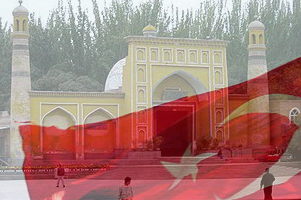
Turkey Raises Central Asian Profile Through SCO Link
By Richard Weitz (vol. 5, no. 14 of the Turkey Analyst)
The decision of the June 6-7 annual meeting of the heads of state of the Shanghai Cooperation Organization (SCO) in Beijing to designate Turkey a formal dialogue partner of the organization is yet another sign of recognition of Turkey’s growing influence in Central and South Asia. Turkey’s new status may also reinforce Ankara’s influence in the region, especially now that other NATO members are reducing their presence in Afghanistan. But Turkey still confronts major obstacles to pursuing its ambitious diplomatic agenda in Central and South Asia. China was likely supportive of deepening the SCO’s ties with Turkey, but Turkey’s relations with Russia might worsen, which in that case will constrain Turkish influence in Central Asia.
Visit also