Building on Division: Erdogan’s Presidential Ambitions

By Gareth Jenkins (vol. 7, no. 9 of the Turkey Analyst)
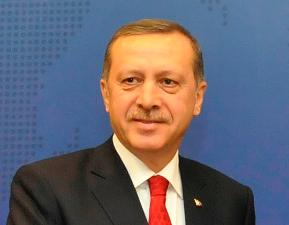
On May 9-11, 2014, Turkey’s ruling Justice and Development Party (AKP) held one of its regular retreats in the western Anatolian city of Afyon. Although no announcement has yet been made, the participants are believed to have informally endorsed Prime Minister Recep Tayyip Erdoğan as the party’s candidate in the presidential elections in August 2014.
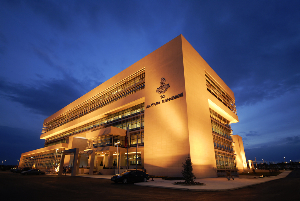
Turkey’s Constitutional Court: The Last Resort of Hope for the Rule of Law?

By Hendrik Müller (vol. 7, no. 8 of the Turkey Analyst)
The determination of Turkey’s Constitutional Court to fulfill its role of upholding the rule of law, in spite of this putting it at odds with the mercurial prime minister, has unexpectedly presented a check on Erdoğan’s ambitions. The recent rulings of the Court raise hopes that it can be a true bastion of the rule of law. But if the allegations that its president, Haşim Kılıç, harbors ambitions to become president of the Republic were revealed to be true, those who have called the integrity of the Court into question will appear to be vindicated. That would be regrettable.
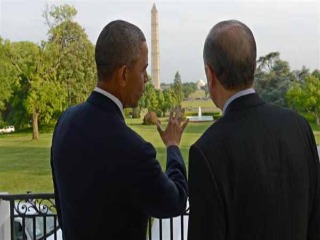
Washington Struggles with Turkey’s Troubles
By Richard Weitz (vo. 7, no. 4 of the Turkey Analyst)
The severe domestic problems of Prime Minister Recep Tayyip Erdoğan are placing a major burden on Turkey-U.S. relations. His authoritarian tendencies and proclivity to blame everyone, including the United States, for his challenges has made it increasingly difficult for the Barack Obama administration to keep silent about his democratic and human rights setbacks. These challenges will likely only increase in coming months.
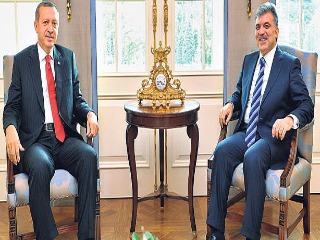
Calculating Cost: President Gül and Turkey's Political Crisis
By Gareth Jenkins (vol. 7, no. 3 of the Turkey Analyst)
In recent weeks, there have been numerous calls for President Abdullah Gül to intervene to calm the continuing domestic political turmoil caused by the power struggle between Prime Minister Tayyip Erdoğan and the Gülen Movement. But any intervention carries considerable risks as well as potential benefits.
A Hint of Desperation: Erdogan’s Crackdown on Free Speech
By Svante E. Cornell (vol. 7, no. 3 of the Turkey Analyst)
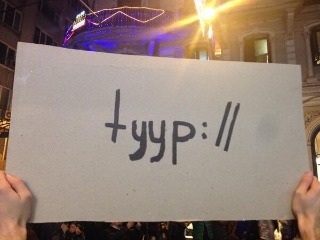
Since Turkish prosecutors launched a major corruption probe targeting the government in December, Prime Minister Recep Tayyip Erdoğan has focused his efforts to prevent the release and dissemination of further incriminating evidence concerning his government and family. This has included efforts to undermine the independence of the judiciary, to stifle freedom of expression, and the peddling of various conspiracy theories. The new, restrictive amendments to laws governing the internet are undoubtedly authoritarian and repressive, but they are simultaneously a sign of weakness.
Visit also




Joint Center Publications
Op-ed Halil Karaveli "The Rise and Rise of the Turkish Right", The New York Times, April 8, 2019
Analysis Halil Karaveli "The Myth of Erdogan's Power", Foreign Policy, August 29, 2018
Analysis Svante E. Cornell, A Road to Understanding in Syria? The U.S. and Turkey, The American Interest, June 2018
Op-ed Halil Karaveli "Erdogan Wins Reelection", Foreign Affairs, June 25, 2018
Article Halil Karaveli "Will the Kurdish Question Secure Erdogan's Re-election?", Turkey Analyst, June 18, 2018
Research Article Svante E. Cornell "Erbakan, Kisakürek, and the Mainstreaming of Extremism in Turkey", Current Trends in Islamist Ideology, June 2018
Analysis Svante E. Cornell "The U.S. and Turkey: Past the Point of No Return?", The American Interest, February 1, 2018
Op-ed Svante E. Cornell "Erdogan's Turkey: the Role of a Little Known Islamic Poet", Breaking Defense, January 2, 2018
Research Article Halil Karaveli "Turkey's Authoritarian Legacy", Cairo Review of Global Affairs, January 2, 2018