Turkey Bets, yet again, on Barzani: Turkey-KRG Relations in Light of the Regional Turbulence

By Gallia Lindenstrauss
February 4th, 2016, The Turkey Analyst
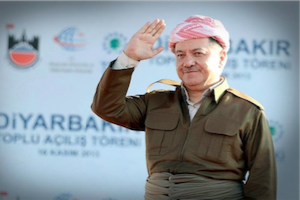
In view of the challenges Turkey is facing in the Middle East, Ankara is attempting to further solidify its relations with the Kurdish Regional Government (KRG) and specifically with KRG’s president, Massoud Barzani. While this policy may assist Turkey in increasing its influence over the future of Iraq and assist it in diversifying its energy suppliers, it is less likely to help Turkey in its internal struggle with its Kurdish minority, or in countering the Kurdish aspirations in Syria. Yet, as the only still relevant remnant of Turkey’s ‘zero Problems’ policy, Turkey-KRG relations do have the potential to assist Ankara in maintaining and solidifying its influence over the future of Iraq.
Erdoğan’s War: The Causes and Consequences of the Upsurge in Kurdish Violence
By Gareth Jenkins (vol. 8, no. 15 of the Turkey Analyst)
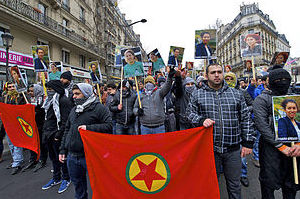
In recent weeks, Turkey has been wracked by an escalation in Kurdish-related violence. Not only could the upsurge have been prevented but there are fears that the worst may yet be to come. The fear is that President Recep Tayyip Erdoğan may order an even harsher crackdown over the weeks ahead and that, with its rural units depleted by deployments to Iraq and Syria, the PKK may increasingly respond by staging attacks, including more suicide car bombings, in the cities.
What the Columnists Say

The question whether or not and to what extent Turkey is going to participate in the fight against ISIS is at the center of the attention of the Turkish columnists after the release of the Turkish hostages held by ISIS. Abdülkadir Selvi in the leading pro-government daily Yeni Şafak writes that Turkey is never going to participate in operations “directed against the Islamic world.” Ali Bayramoğlu, also in Yeni Şafak, writes that Turkey is concerned that the fight against ISIS is going to bestow new legitimacy on Bashar al-Assad, and that the PKK is going to become empowered as a part of the coalition. Ergun Babahan on the t24 news site cites Kurdish news sources that claim that Turkey has been providing weapons and ammunition to ISIS forces that have laid siege on Kobane, and warns that the Kurds cannot be controlled by using the methods of the Cold War.
Turkey’s Water Policies Worry Downstream Neighbors

By John Daly (vol. 7, no. 16 of the Turkey Analyst)
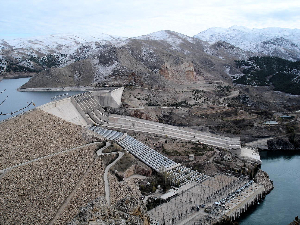
As armed conflict ravages Syria and Iraq, Turkey risks adding to the social and political tensions to its south by cutting the water flow of the Euphrates, which originates in southeastern Turkey and is Western Asia’s longest river, to downstream states. Compounding Iraqi misery, the Islamic State (IS) has been using water as a weapon of war. As unrest continues to roil the Fertile Crescent, whether water is used as a tool of inconsiderate state policy or a weapon of war, the suffering of civilians and farmers has dire political consequences. What is certain is that Turkey’s ambitious GAP program is adding to the misery of the downstream populations.
You Reap What You Sow: The Rise of ISIS and the Sectarian Dimension of the AKP’s Foreign Policy

By Halil Gürhanlı (vol. 7, no. 12 of the Turkey Analyst)
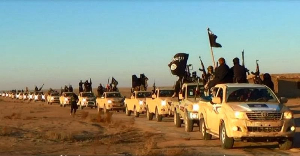
As the the Sunni militant group, the Islamic State of Iraq and al-Sham (ISIS), keeps expanding its sphere of influence deeper into Iraq, the Justice and Development Party (AKP) government of Turkey is facing a very real fear. Its neo-Ottoman dream of becoming a regional hegemonic power revered by ideologically affiliated governments in the Middle East is turning into a nightmare. The rise of ISIS is a painful reminder for Turkey that its Middle Eastern policies are bound to cause unpleasant side effects.
Visit also




Joint Center Publications
Op-ed Halil Karaveli "The Rise and Rise of the Turkish Right", The New York Times, April 8, 2019
Analysis Halil Karaveli "The Myth of Erdogan's Power", Foreign Policy, August 29, 2018
Analysis Svante E. Cornell, A Road to Understanding in Syria? The U.S. and Turkey, The American Interest, June 2018
Op-ed Halil Karaveli "Erdogan Wins Reelection", Foreign Affairs, June 25, 2018
Article Halil Karaveli "Will the Kurdish Question Secure Erdogan's Re-election?", Turkey Analyst, June 18, 2018
Research Article Svante E. Cornell "Erbakan, Kisakürek, and the Mainstreaming of Extremism in Turkey", Current Trends in Islamist Ideology, June 2018
Analysis Svante E. Cornell "The U.S. and Turkey: Past the Point of No Return?", The American Interest, February 1, 2018
Op-ed Svante E. Cornell "Erdogan's Turkey: the Role of a Little Known Islamic Poet", Breaking Defense, January 2, 2018
Research Article Halil Karaveli "Turkey's Authoritarian Legacy", Cairo Review of Global Affairs, January 2, 2018