Erdoğan and the Iran War: Authoritarianism Makes Turkey Vulnerable
By Halil Karaveli
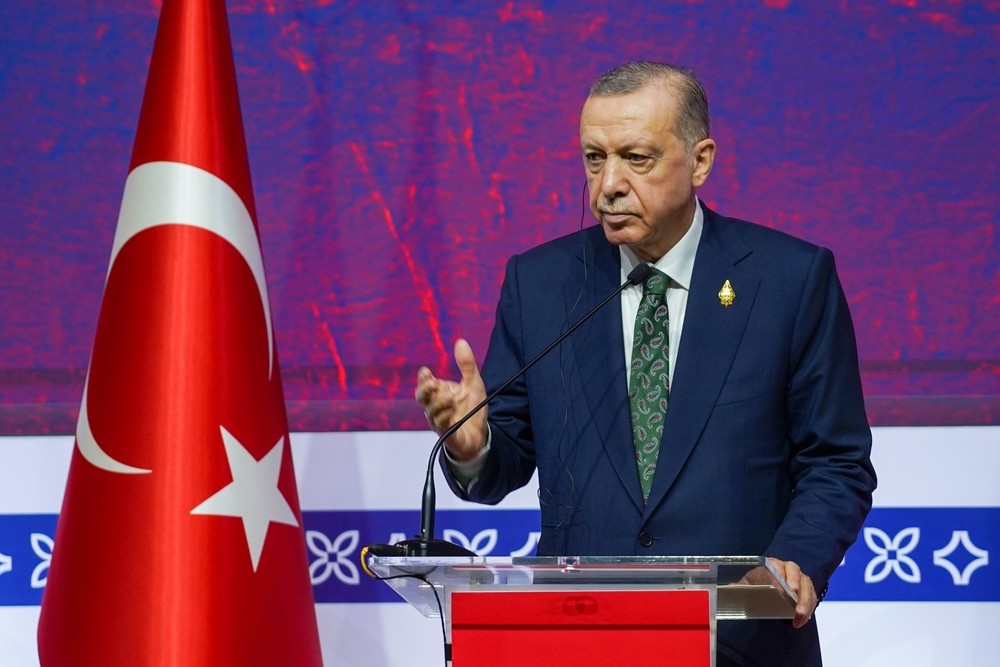
Provided that he succeeds in maintaining Turkish neutrality and in shielding Turkey from the fallout of the Iran war, President Recep Tayyip Erdoğan’s standing with the Turkish public will presumably be bolstered. But Erdoğan nonetheless faces difficult challenges and dilemmas ahead, as his personal power ambitions and national security imperatives ultimately cannot be reconciled. Having to contend with Israel’s regional domination and expansionism, Turkey is compelled to accommodate Kurdish aspirations, something that Erdoğan has so far been extremely reluctant to do. While Erdoğan’s foreign policy leadership may appear well suited for the perilous moment, his authoritarian rule isn’t.
BACKGROUND:
Speaking on March 14, Turkey’s Foreign Minister Hakan Fidan said that Turkey’s “primary objective” is to stay outside of the war in the Middle East. Fidan ruled out a military response at this stage in response to three Iranian missiles that were intercepted over Turkey by NATO defenses. Fidan said that available data shows that the missiles were fired from Iran, which Iranian officials have denied. “I know that we are being provoked and we will be provoked, but this is our objective,” he said. “We want to stay out of this war,” he emphasized.
In his statement on February 28, when the United States and Israel attacked Iran, assassinating its Supreme leader Ali Khamenei, members of his family and a score of government figures, Turkey’s President Recep Tayyip Erdoğan called for the return to diplomacy and a ceasefire to prevent the region from being dragged into a wider conflict. “We are deeply saddened and concerned by the U.S.-Israeli attack against Iran,” Erdoğan stated, eschewing outright condemnation. Claiming that the attack on Iran was the “result of Netanyahu’s provocations,” Erdoğan tacitly exonerated the U.S., singling out Israel as the main culprit. He also said that Turkey likewise finds Iran’s missile and drone attacks against the Gulf countries “unacceptable, regardless of the circumstances.”
Turkey and Iran are bound together by culture and ethnicity – Ali Khamenei was part Turkish, reciting poetry in Turkish, as is Iran’s President Masoud Pezeshkian – but separated by geopolitics. Since Antiquity, the powers that have controlled the Anatolian and Iranian plateaus – Greeks and Persians, Byzantines and Sasanids, Ottomans and Safavids -- have been locked in fierce rivalry over the control of trade routes and buffer zones from Mesopotamia to Caucasus. It’s no coincidence that Turkey and Iran have been on opposite sides in Syria and that Iran has supported Armenia against Azerbaijan. Geopolitics has trumped ethnicity and religion: the Ottoman and Safavid empires were both founded by Turkish tribes.
In their bid to challenge the Ottomans as the leading Islamic power and seeking to wrest Anatolia from it, the Safavids forcefully converted Sunni majority Persia to Shiite Islam – an unprecedented act in Islamic history -- which in turn prompted a turn to Sunni orthodoxy by the Ottomans. Yet while a weakened -- not destroyed -- Iran is in Turkey’s geopolitical interest, the hegemony that Israel is establishing in the Middle East risks cancelling out any potential Turkish gains.
Israel’s Prime Minister Benjamin Netanyahu recently declared his intention to forge a new “hexagon” of alliances designed to outflank an “emerging radical Sunni axis.” The regional counter-alliance that Netanyahu envisions would pointedly include Greece and the Greek-ruled part of Cyprus. Echoing the anti-Turkish statements of other leading Israeli politicians, former Israeli Prime Minister and opposition politician Naftali Bennett claimed that Turkey is a threat to Israel, and accused it of forming a regional axis “similar to the Iranian one.”
IMPLICATIONS:
On March 17, Erdoğan in turn alleged that “Israel is led by a network that considers itself superior to others and is gradually dragging the region toward a disaster.” “We all know that the attacks targeting Gaza first then Yemen and Lebanon, and most recently Iran, are not solely motivated by security concerns,” Erdoğan opined. In a speech to the Turkish parliament in October 2024, Erdoğan asserted that the Jewish state harbored designs on Anatolia. Voicing similar concerns, Foreign Minister Fidan in a recent interview said that “they (the Israelis) are after not security, they are after more land.” “So long as they don’t give up this idea, there will always be a war in the Middle East,” Fidan contended.
Yet somewhat inconsistently, Fidan dismissed the suggestion that Turkey could be the next target for Israel, while adding that “as long as Netanyahu is there, Israel will always identify somebody as an enemy.” Downplaying the notion of an Israeli threat to Turkey, Fidan insisted that “if not Turkey, they would name some other country in the region.” It’s clear that Turkey seeks to avoid a confrontation with Israel, but Israel’s avowed determination to check Turkey inevitably puts the two countries on a collision course. Fidan acknowledged that the Iran war has provided Turkey with an increased incentive to step up its own production of weapons and air defenses. Yet Turkey’s main defense against Israel is not military, but societal.
Turkey’s leaders are haunted by the fear that Israel will exploit Turkey’s ethnic divisions, as statements by Israeli officials indeed attest to. In November 2024 Israeli Foreign Minister Gideon Saar described the Kurdish people as victims of Turkish and Iranian oppression and Israel’s “natural ally” and called for strengthening Israel’s ties with them. Cognizant of Israeli intentions, Erdoğan in his speech to the Turkish parliament in October 2024 emphasized the need to “fortify the home front” in the face of “Israeli aggression.” Co-opting the Kurds is a national security imperative for Turkey, and Kurdish reactions to the U.S.-Israeli war on Iran have vindicated Ankara’s reconciliation since 2024 with the Kurdistan Workers’ Party (PKK) and its imprisoned leader Abdullah Öcalan.
While the United States and Israel have sought to mobilize Kurdish support in Iran and among Kurdish groups in Iraq in an effort to break Iran apart and bring down the Islamic Republic, Tülay Hatimoğulları, the co-chair of the pro-Kurdish Democracy and Equality (DEM) Party, denounced the war as an act of imperialism. Duran Kalkan, a leading representative of the PKK – which has officially dissolved -- stated that the Kurds are not going to serve anyone else’s military or other interests. Kalkan also defended that a solution in Iran must be reached by the peoples of Iran themselves and preserve the integrity of the country.
After Iran came under the U.S.-Israeli attack, Devlet Bahçeli, the leader of the Nationalist Movement Party (MHP), who in October 2024 initiated the latest Turkish opening to the Kurds when he held out the prospect of Öcalan’s release, asked his critics “do you now understand our purpose, why we have invoked Turkish-Kurdish brotherhood?” Meanwhile, Turkey’s former Prime Minister and Foreign Minister Ahmet Davutoğlu, the leader of the conservative Future Party, warned that Israel could try to derail Turkey’s peace initiative with the Kurds by provoking ethnic violence in Turkey, a statement that mirrors the fear-mongering of Israeli right-wing politicians.
Turkey’s electorate will now more than ever be looking for national leadership that conveys strength, which puts the main opposition Republican People’s Party (CHP) at a disadvantage. The CHP is animated by an idealistic faith in the discarded liberal order and struggles to stay relevant in the shadow of the war. The regional conflagration has overshadowed the trial of Ekrem İmamoğlu, the imprisoned presidential candidate of the CHP that began on March 9. For a majority, Erdoğan personifies the national strength that Turkey relies on in an anarchic and illiberal world. According to a recent poll, conducted a few weeks before the outbreak of the Iran war, 58 percent said that they would vote for Erdoğan if there was a risk of war while 20 percent said they would elect Özel. Only a few percent said they would vote for İmamoğlu in times of war.
CONCLUSION:
Provided that he succeeds in maintaining Turkish neutrality and in shielding Turkey from the fallout of the Iran war, Erdoğan’s standing with the Turkish public will presumably be bolstered. But Erdoğan nonetheless faces difficult challenges and dilemmas ahead, as his personal power ambitions and national security imperatives ultimately cannot be reconciled.
Democracy must be restored if Turkey is to consolidate its home front. Having to contend with Israel’s regional domination and expansionism, Turkey is compelled to accommodate Kurdish aspirations, something that Erdoğan has so far been extremely reluctant to do. And societal reconciliation will elude Turkey if reforms for the Kurds are coupled with oppressive measures against the main opposition party.
While Erdoğan’s foreign policy leadership may appear well suited for the perilous moment, his authoritarian rule isn’t.
AUTHOR'S BIO:
Halil Karavel is a Senior Fellow with the Central Asia-Caucasus Institute & Silk Road Studies Program Joint Center and the Editor of the Turkey Analyst. He is the author of Why Turkey is Authoritarian: From Atatürk to Erdoğan (Pluto Press).
Does Turkey Stand to Win or Lose as Israel Takes on Iran?
By Barçın Yinanç
President Recep Tayyip Erdoğan’s claim that Israel poses a threat and might even attack Turkey lacks credibility. On the contrary, Turkish and Israeli strategic interests converge. Turkey and Iran have long been at odds in Syria, Iraq as well as in the south Caucasus and Turkey may welcome the degradation of Iranian power in the Middle East. Yet Ankara must also reckon with the risks of an all-out war between Israel and Iran for Turkish interests. Its military presence in Syria and Iraq exposes Turkey to the risk of being directly affected by the conflagration. Ultimately, the unknown consequences of a wider regional war and its spillover effects could outweigh the benefit for Turkey that a weakened Iran would represent.

BACKGROUND: Addressing the opening session of the Turkish parliament on October 1, President Recep Tayyip Erdoğan claimed that Israeli Prime Minister Benyamin Netanyahu is acting out his dream of a "promised land" for Israel and that the Jewish state harbors designs on Turkish territory. "After Lebanon, the next place on which Israel will set its eyes will be our homeland," Erdoğan asserted. The opposition asked for information that sustains the claim: “If there is a threat from Israel, we would like to know about it,” said Özgür Özel, the leader of the main opposition Republican People’s Party (CHP). On October 8, the Turkish parliament held a closed session during which the foreign and defense ministers briefed the lawmakers on the security risks that the wars in Gaza and Lebanon represent. Speaking after the closed session, opposition leader Özgür Özel commented that he had not been convinced about the existence of a purported Israeli threat against Turkey. “We did not hear anything that we did not already know,” he said. The conflagration in the Middle East provides Turkey’s ruling Justice and Development Party (AKP) with an opportunity to consolidate its constituency and mobilize the public. Conjuring an alleged Israeli threat and calling a closed session of the parliament serves to instill a sense of emergency and insecurity among the population. Yet what ultimately amounts to an attempt to divert attention from the dire state of the economy backfired: the announcement of the government – directly after the closed session of the parliament – that new taxes were going to be imposed to boost the national defense industry caused a public backlash and the proposal had to be withdrawn. Nonetheless, Turkish Foreign Minister Hakan Fidan has continued to raise alarm, warning about the risk not only of a wider regional war but also of a Third World War. Although national security issues and the specter of war are clearly exploited for domestic political purposes, with the government hoping to divert public attention from more immediate economic worries, Ankara nevertheless also remains seriously concerned about the fallouts of the escalating conflict between Israel and Iran.
IMPLICATIONS: Turkey was the first Muslim country to recognize the Jewish state, and even though the Palestinian problem historically has been a strain on bilateral relations, Turkish and Israeli national security interests in fact converge. It was only after the peace process between Israel and the Palestine Liberation Organization (PLO) in the early 1990s that Turkish-Israeli bilateral ties were significantly developed but public appearances can be misleading: While Turkey is less vocal about Iran – a neighbor with which its geopolitical rivalry dates to the sixteenth century – than it is about Israel, which it pretends is an enemy but with which it shares strategic interests, Turkey and Iran have clashing interests across the Middle East and beyond. Israel appears determined to inflict huge damage to Hezbollah in Lebanon, and by extension to its patron Iran. This strategy may very well be seen as serving Ankara’s interests, at least in the short term. Turkey and Iran have long been at odds in Syria, Iraq as well as in the south Caucasus. In this light, the degradation of Iranian power in the Middle East is in Turkey’s interest. Indeed, when the Islamist uprising started in Syria 2011, the Turkish AKP government sought to topple Syrian leader Bashar Al-Assad, whose regime survived only thanks to the active support of Russia and Iran. Today, Turkish military units as well as Turkish-backed Islamist groups stand pitted against Iran-backed militias in northwestern Syria. Under normal circumstances, Israel’s airstrikes against Hezbollah positions in Syria, as well as its attack on Iran’s consulate in Damascus last April would hardly have displeased Ankara. Yet Ankara must also reckon with the risks that an all-out war between Israel and Iran inevitably would pose for Turkish interests. Ultimately, the unknown consequences of such a war and its spillover effects could outweigh the benefit for Turkey that a weakened Iran would represent. But domestic political considerations are no less pressing. Erdoğan and his ruling AKP must contend with the widespread popular discontent with the nearly four million Syrian refugees in Turkey; this discontent, which has already cost the AKP votes in recent elections, compels Erdoğan to mend fences with Al-Assad who, however, has been less than willing to accommodate Turkey. The quadrilateral talks between Russia, Iran, Turkey and Syria have been inconclusive as Damascus’ precondition – the withdrawal of Turkish forces from Syrian territory – is a nonstarter for Ankara. Ultimately though, Al-Assad may become more open to reconciliation with Erdoğan as Israel’s onslaught demolishes Hezbollah and degrades the Iranian power that he has relied on. Israel’s next step in its clash with Iran could also have implications in Iraq, where Tehran has acquired considerable political clout after the 2003 U.S. invasion empowered the Shiite majority. Turkey views Iran as a destabilizing actor in Iraq and tries to counterbalance its influence. Iran backs one of the Kurdish rival factions, the Kurdistan Patriotic Union (PUK) which retains close ties with the terrorist Kurdistan Workers’ Party (PKK) that has waged a now four decades long insurgency against Ankara. As the PKK’s freedom of movement has increased in the area under the PUK control, tensions have intensified between Turkey and Iran. Meanwhile, the relationship between Tehran and Baghdad is far from being a simple agent-proxy arrangement. Last August, Iraq signed a memorandum of understanding on military, security and counter-terrorism cooperation with Turkey, raising Iranian concerns about Ankara’s increasing military influence in Iraq. Turkey has established military bases and posts in northern Iraq, and the rapprochement between Turkey and Iraq attests to Baghdad’s effort to consolidate its relative stability as well as its independence from Tehran. Also economic schemes like the Development Road Project, a proposed trade network that will link Iraq to Turkey serves this purpose. For its part, Ankara wants to use the project as an incentive to secure Baghdad’s cooperation against the PKK while the Iranian-backed PUK has expressed its opposition to the Development Road Project, questioning its benefits for the Kurdish region of Iraq. But as Iran is preoccupied with Israel’s offensive, its ability to maneuver in Iraq may become constrained, increasing the capability of the central government in Baghdad to exert power over its territory. In such a scenario, the Iranian-backed Kurdish PUK might be compelled to sever its ties with the PKK. Yet while the degradation of Iranian power would thus translate into gains for Turkey in Iraq, the security situation in Iraq is also of growing concern for Ankara. Although the Iraqi front has remained relatively quiet since October 7, 2023, there are signs that this might be about to change. Iran-backed Iraqi militias have now claimed responsibility for nearly 170 attacks on Israeli targets this past year, of which more than 70 percent took place in September 2024 alone. The escalation may bring about the targeting of U.S. forces that are based mainly in areas under the control of the Kurdistan Democratic Party (KDP). U.S. assets in both Syria and Iraq have already been targeted. The spillover to Iraq threatens to disrupt the relative yet fragile stability of the country to the detriment of Turkish interests.
CONCLUSIONS: President Erdoğan’s claim that Israel poses a threat and might even attack Turkey lacks credibility. It is a transparent attempt by the AKP government to divert public attention from the country’s dire economic situation. In fact, Turkish and Israeli strategic interests converge. Turkey and Iran have long been at odds in Syria, Iraq as well as in the south Caucasus and Turkey may thus welcome the degradation of Iranian power in the Middle East. Yet Ankara must also reckon with the risks that an all-out war between Israel and Iran would inevitably pose for Turkish interests. With its military presence in Syria and Iraq Turkey is at risk of being affected and possibly even drawn into the conflagration in the Middle East. Ultimately, the unknown consequences of a wider regional war and its spillover effects could outweigh the benefit for Turkey that a weakened Iran would represent.
Barçın Yinanç is a foreign policy commentator at the Turkish news site t24
Siding Openly with Hamas, Turkey is Sidelined on Settlement Talks
By Barçın Yinanç
June 18, 2024
President Recep Tayyip Erdoğan missed the opportunity to play a constructive role in the Gaza conflict. Unabashedly siding with Hamas, Erdoğan has repeated the mistake that his government committed when the Arab revolts broke out in 2011. Promoting the cause of the Muslim Brotherhood across the Middle East proved to be a diplomatic disaster from which Turkey still struggles to recover. Yet ideological optics has once again blinded Turkey’s ruling party, with AKP officials failing to see that neither Western countries nor the Arab countries are prepared to concede a role for the Islamist Hamas in any future settlement. The relentless insistence on siding with Hamas while displaying open hostility to Israel diminishes Turkey’s chances to be an active player in any negotiations. Being sidelined makes Turkey more aggressive and thus consolidates its image as an untrustworthy actor.
Can Turkey Both Stand Up to Israel and Do Business with It?
By Reuben Silverman
January 12, 2024
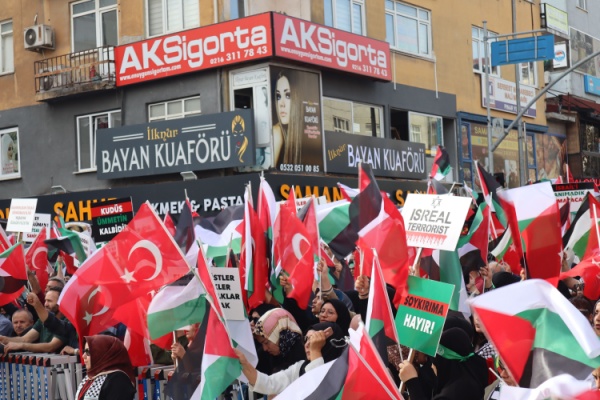
On the eve of Turkey’s centennial anniversary celebrations, President Recep Tayyip Erdoğan held a mass rally in support of Palestine. He reminded his audience that, only a century earlier, Gaza had been part of the Ottoman Empire. He condemned Israel’s government and criticized the West for remaining silent in the face of Israel’s retaliatory killing of civilians, wondering if it wanted to encourage conflict between “crescent and cross.” Yet, while this heated rhetoric positions Turkey as the ultimate opponent of Israeli expansionism and protector of Palestinians, it obscures on-going Turkish-Israeli relations and the strategic interests that may limit Erdoğan’s actual diplomatic options.
The Gaza-Ankara-Jerusalem Triangle: How Israel and Turkey Made Up on Gaza Above the Heads of Palestinians and Egyptians

By Nathan Shachar
July 8, 2016
Whatever dividends the fresh Turkish-Israeli rapprochement will bring, it reveals something fundamental about the new Middle East: the number of unknown variables in this ever less predictable environment is steadily growing, and even the most arrogant and unrepentant leaders will have to eat crow from time to time in order to salvage their national interests. Leaders who stand by their words and their principles will be severely handicapped.
Visit also