The Growing Alignment of Turkey and Saudi Arabia
By Emil Avdaliani
Turkey and Saudi Arabia have pledged to elevate bilateral relations by expanding cooperation in defense and renewable energy spheres, marking a new page in bilateral relations. Turkey’s engagement with Saudi Arabia is expected to grow as the two countries’ geopolitical ambitions align from Syria to Sudan to Yemen. For Turkey, boosting the relations with Saudi Arabia fits into its broader effort of containing Israel and improving ties with key Middle East actors. Given that Saudi Arabia too has much at stake in Syria’s economic and political rehabilitation as well as in the Horn of Africa, its alignment with Ankara is now accelerating at a full speed. Another key driver of the growing alignment between the two countries has been their expanding military cooperation. The Saudi-Turkish alignment is also about the middle power activism, based on the recognition that a multi-aligned foreign policy is the order of the day, providing space and opportunities for geopolitical maneuvering. Nonetheless, Turkey and Saudi Arabia will refrain from building an official alliance as it would limit their freedom of maneuvering.
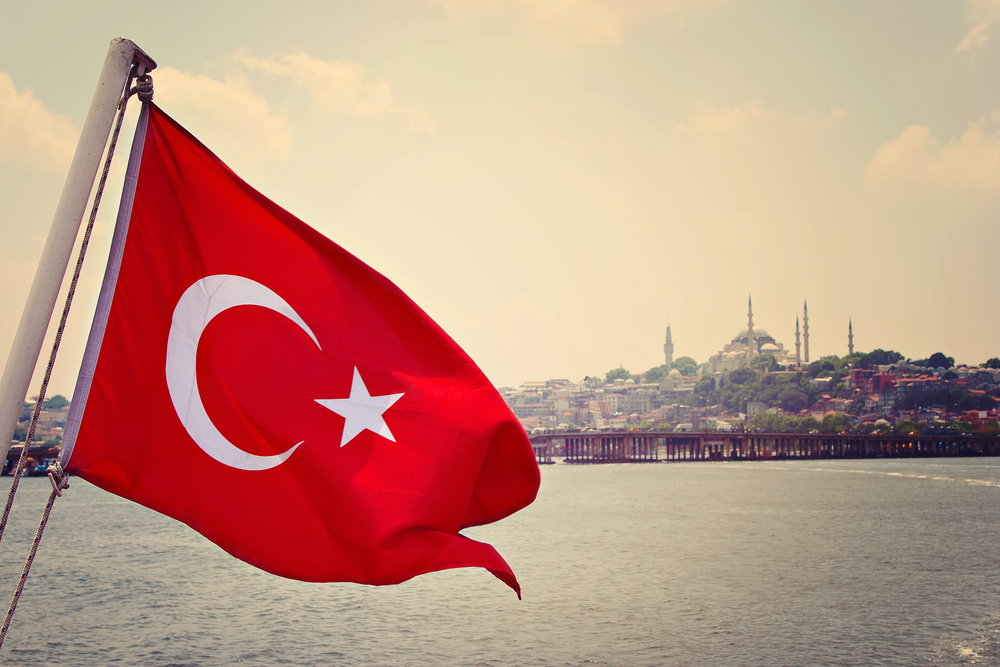
BACKGROUND: On February 3, Turkey’s President Recep Tayyip Erdoğan visited Riyadh where he met Saudi Arabia’s Crown Prince Mohammed bin Salman. The two sides pledged to elevate bilateral relations by expanding cooperation in defense and renewable energy spheres marking a new page in bilateral relations.
The two countries have not always enjoyed positive ties. In the recent past, divergent strategic visions on most of the conflicts in the Middle East kept Riyadh and Ankara apart. By 2021, however, the strategic environment shifted. Turkey’s outreach to its regional competitors –including Saudi Arabia – began amid a “de-escalation moment,” driven by economic constraints after the pandemic and uncertainty about long-term United States security commitments.
One of the key drivers of the growing alignment between the two countries has been the expanding military cooperation. Riyadh wants to become less dependent on foreign supplies of military hardware and boost domestic military production. As a major military exporter, Turkey’s experience in know-how is key in that regard. The two countries have signed a string of military deals over the past few years. For instance, during President Erdoğan’s tour of the Gulf countries in 2023, Saudi Arabia agreed to buy Turkish drones; moreover, the package was explicitly tied to industrial cooperation such as technology transfer and joint production leading to long-term high-technology development. Later the same year, the Saudi side announced a strategic agreement with the Turkish defense producer Baykar to localize drone manufacturing in the kingdom. Another area of ongoing cooperation is joint investment in Turkey’s KAAN fighter project.
There is also a burgeoning cooperation in renewable-energy sphere. Turkey and Saudi Arabia have now signed an agreement which will involve Saudi investment of $2 billion to build two 1,000MW solar farms in Sivas and Karaman (2,000MW first phase) in Turkey. The joint statement released by the Turkish and Saudi leaders also emphasized cooperation on grid interconnection feasibility studies, energy storage, energy efficiency, and clean hydrogen. Relatedly, bilateral trade had reached $8 billion in 2025 and around 400 projects in Saudi Arabia worth more than $30 billion were carried out through the involvement of Turkish companies.
This strategic pragmatism is embodied Saudi Arabia’s Vision 2030. The pursuit of economic diversification and local defense-industrial capacity has created incentives to engage a capable regional producer (Turkey) rather than relying exclusively on traditional Western suppliers, while also preserving flexibility in an increasingly multipolar environment. This logic is evident in the emphasis on technology transfer and localisation in the defence relationship, and in expanding energy cooperation beyond hydrocarbons into renewables.
IMPLICATIONS: Crucially, there is also a wider geopolitical context that is pushing Turkey and Saudi Arabia closer. Across the Middle East, from Yemen to Iran to Syria, the two countries’ foreign policies are increasingly aligned. Ankara and Riyadh have both opposed Israel’s war in Gaza. This is not only out of Islamic solidarity but more based on shared strategic calculations, chiefly to contain Israel. The latter’s military power and regional influence has grown since 2023 when the war in Gaza broke out. Since then, the Jewish state has defeated Iran’s allies, Hezbollah and Hamas and intermittently bombed the Houthis in Yemen, also part of the Iran-backed Axis of Resistance. And since the downfall of the Assad regime in Syria, Israel has carried out a systemic aerial campaigning against military assets across Syria. Tel-Aviv’s calculus has been clear. It has acted against the growing Turkish influence in Syria.
Israel’s projection of power reached the Persian Gulf when Hamas’ representation in Doha was targeted shattering the sense of security in the region as the United States, which has a military base in Qatar, stood by. In late 2025 Tel-Aviv recognized the breakaway Somaliland as independent state signaling Israel’s intentions in the Horn of Africa. Israel’s goal is to move as closely as possible to Yemen to better target and contain the Houthis. Yet, the move is ultimately also about containing Turkey’s ambitions in Somalia, Sudan and Ethiopia. Containing Israel, therefore, now a key foreign policy goal of Turkey and given that Saudi Arabia too has much at stake in Syria’s economic and political rehabilitation as well as in the Horn of Africa, its alignment with Ankara is now accelerating at a full speed.
Turkey and Saudi Arabia align around the idea of a united Yemen and are determined to thwart the secessionism in the south of the country. Ankara and Riyadh share a similar approach in relation to Sudan and especially regarding Syria, where President Ahmed al-Sharaa has been supported by Turkey and Saudi Arabia in his endeavor to bring the Kurds into the central state’s fold.
Riyadh’s openness to expand relations with Turkey is also linked to the kingdom’s ongoing tensions with the United Arab Emirates. Saudi Arabia wants to balance Abu-Dhabi, and Ankara is a good candidate in that regard. Moreover, Turkey itself has strategic interests in the regions -- from Yemen to the Horn of Africa -- where the Saudi-UAE rift has materialized and has increased its engagement through military and economic cooperation. Neither Ankara nor Riyadh want to see a nuclear Iran, but oppose a U.S. attack against Iran as a weakened and destabilized Iran would further shift the regional balance of power in Israel’s favor.
While moving closer, Turkey and Saudi Arabia nonetheless remain hesitant to form an official alliance as a formalized relationship would constrain their freedom of maneuver. Although there have been reports that Turkey has exhibited an interest in joining the Saudi-Pakistani military alliance, Ankara has allegedly refrained from doing so.
Turkey is a NATO member and joining the Saudi-Pakistan alliance would have brought additional security responsibilities that Ankara does not want to take on officially, notwithstanding that Turkey’s relations with Pakistan have reached unprecedented highs whether in security, military or economic spheres. Thus, the ongoing alignment should not be mistaken for a formal alliance in the making. It rests on a convergence of interests – regional stability, autonomy from great-power constraints -- and offers mutually beneficial economic opportunities; it is pragmatic and not ideological.
CONCLUSION: For Turkey, boosting the relations with Saudi Arabia fits into its broader effort of containing Israel and improving ties with key Middle East actors. It was therefore no coincidence that Turkish President Erdoğan after his trip to Saudi Arabia visited Egypt, a major regional player involved in the efforts to bring the war in Gaza to an end.
The Saudi-Turkish alignment is also about the middle power activism. Both Turkey and Saudi Arabia are key middle-powers and actors in the Middle East, and their alignment is ultimately boosted by a shared understanding that the world has entered into a multipolar period where multi-aligned foreign policy is the order of the day, providing space and opportunities for geopolitical maneuvering.
AUTHOR'S BIO: Emil Avdaliani is a research fellow at the Turan Research Center and a professor of international relations at the European University in Tbilisi, Georgia. His research focuses on the history of the Silk Roads and the interests of great powers in the Middle East and the Caucasus.
Engulfed in the Gulf: Erdoğan and the Qatar Crisis
By Svante Cornell
June 29, 2017
The Gulf crisis over Qatar is once again catapulting Turkey into the politics of the Middle East, for which it is woefully unprepared. After a brief attempt at neutrality, Ankara threw in its lot with Doha, condemning the sanctions imposed by a Saudi-led coalition and accelerated its deployment of troops to a new base in Qatar. This decision risks upsetting President Erdoğan's tenuous rapprochement with Saudi Arabia, and reflects the continued ideological prism guiding Turkish foreign policy. But it also reflects a concern with regime security. At least in part, Erdoğan's embrace of Qatar reflects a belief that the same forces that supported the overthrow of Egypt's Muhammad Morsi welcomed the July 2016 failed coup in Turkey and now seek regime change in Doha. If so, Turkey's stance is unlikely to change, indicating a standoff may in the making.
Turkey is Expecting a Restart with the U.S.

By Halil Karaveli
January 23, 2017
The Kurdish question has, once again, complicated Turkish-American relations. The rhetoric of anti-Americanism remains useful to whip up and mobilize nationalist opinion. Yet, Erdoğan’s Islamists are not any aspiring anti-imperialists. What they want – and what they expect that Turkey is now going to get – is simply a better “business deal” with the United States under Donald Trump.
The Gaza-Ankara-Jerusalem Triangle: How Israel and Turkey Made Up on Gaza Above the Heads of Palestinians and Egyptians

By Nathan Shachar
July 8, 2016
Whatever dividends the fresh Turkish-Israeli rapprochement will bring, it reveals something fundamental about the new Middle East: the number of unknown variables in this ever less predictable environment is steadily growing, and even the most arrogant and unrepentant leaders will have to eat crow from time to time in order to salvage their national interests. Leaders who stand by their words and their principles will be severely handicapped.
Münir: Erdoğan’s order is going to crumble just like Atatürk’s order did
Metin Münir on t24 news site writes that the regime in Turkey is engaged in an attempt to reverse what Atatürk and his friends did when they founded the republic in 1923; they are founding a new republic. It is going to a place where conservatives, the pious and the lumpen rule supreme, and where everyone else is excluded; it is going to be a Sunni and not secular, a Middle Eastern and not European Turkey. If Atatürk and his friends had not emerged when the empire fell, Turkey would have been a mix of Pakistan, Saudi Arabia and Iraq. This fate was averted, but the founders of the republic were unable to create a peaceful regime. That was because they did not accept that Turkey is a mosaic that is made up of Turks and Kurds, of Sunnis and Alevis and of many other religious and ethnic minorities. Instead, they erected a regime ruled by secular Turks. That did not work. The emergence of Erdoğan and his friends is the result of this neglect. Now, they are repeating the same mistake in a different way. They have replaced the rule of the secular Turks with the rule of the Sunni Turks – again by disregarding the Alevis and the Kurds and the seculars who have become the biggest minority. This is not going to work either. It is going to crumble. A new order will eventually be created, but only after we have gone through indescribable miseries and destruction.
Visit also